
 中文简体
中文简体 русский
 Français
 Español
 Português
 Deutsch
 عربى
عربى italiano
 Türk
Türk

Search
Categories
Recommend News
Categories
Recommend News
-
Industry News
-
Industry News
-
Industry News
-
Industry News
Sep 28, 2026 - By admin
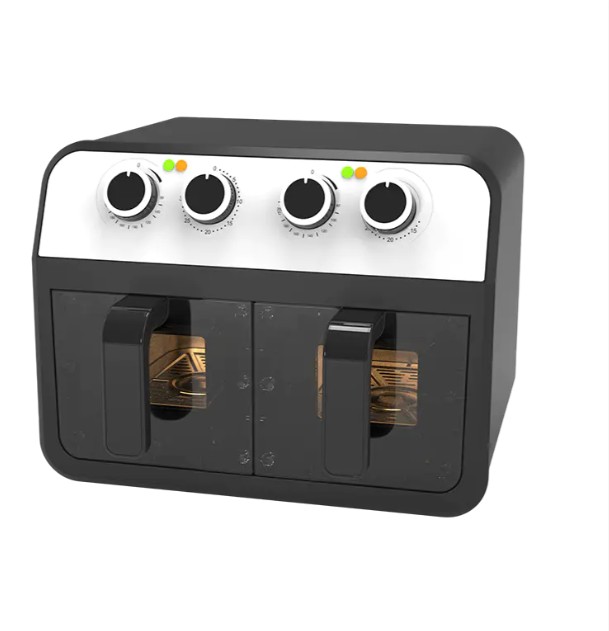
How Does an Air Fryer Work? Types, Sizes and Buying Guide
Air Fryer Basics: What It Is and Which Size and Type to Choose
An air fryer is a compact countertop appliance that uses a heating element and a powerful fan to circulate very hot air around food, producing a crisp, browned surface with little or no added oil. For most households, a basket-style air fryer in the 3 to 5 liter range covers daily cooking for one to three people, while larger or dual-zone models suit families, and oven-style models suit cooks who want to prepare bigger trays. The right air fryer depends on how many people you cook for, how much counter and storage space you have, which foods you cook most often, and how easily the basket and interior can be cleaned.
Despite the name, an air fryer does not fry food in a bath of oil. It works like a small, fast convection oven, in which a fan keeps hot air moving across the surface of the food. The compact chamber and the strong airflow speed up heat transfer, which is why many foods cook faster than they do in a full-size oven. Air fryers became widely available to household cooks in the early 2010s, and today they are common in home kitchens as well as in party, retail and foodservice settings.
This guide explains the main types of air fryer, how the structure and principle work, how to choose a capacity, how to use an air fryer with safe cooking temperatures, and how to keep the appliance clean. It also covers what importers, distributors and retailers should look for in an air fryer manufacturer or supplier. To see the range while you read, you can visit the air fryer product page from Homease.
Short answer: choose a basket-style air fryer of 3 to 5 liters for everyday home use, and move up to a dual-zone or oven-style air fryer when you cook for larger groups.
Common Types of Air Fryer and Their Features
Air fryers are sold in several formats, and the differences are mainly about capacity, layout and how many foods can be cooked at once. The cards below summarize the four formats that buyers most often compare. On a narrow screen, the cards can be scrolled sideways.
-
Basket-type air fryer
The most common format. Food sits in a pull-out basket beneath a heating element and fan. It suits daily meals, snacks and reheating for one to three people. Check basket capacity, the quality of the non-stick coating and how easily the basket separates for cleaning.
-
Dual-zone air fryer
Two separate baskets with independent controls let users cook two foods at different temperatures or times and finish them together. It suits families and busy kitchens. It takes more counter space, so measure the area before choosing.
-
Oven-style air fryer
A box-shaped unit with a front door and removable racks, similar to a small oven. It handles trays of food, baked items and larger cuts. Check the interior height, the rack positions and how the door opens on your counter.
-
Compact personal air fryer
A small unit of about 2 liters or less, made for one person, snacks or a small kitchen. It heats quickly and stores easily. Check that the basket is large enough for the foods you cook most often.
Features shared by every air fryer
Whatever the format, an air fryer is built from the same basic set of parts. Understanding them makes product descriptions easier to read and models easier to compare.
- A heating element that raises the temperature of the air in the chamber.
- A fan that moves the hot air quickly around the food.
- A cooking chamber with a basket, tray or rack that allows air to pass around the food.
- Temperature and timer controls, either as dials or as a digital panel.
- A housing with air vents that let steam and heat leave the unit.
Features that separate one model from another
- Capacity and floor area of the basket, which decide how much food fits in a single layer.
- Control type, since dial controls are simple to read and digital panels often add preset programs.
- Temperature range and how evenly the unit holds the chosen setting.
- Basket or rack design, including the non-stick coating and how easily it can be removed and washed.
- Noise level, cord length and the space required around the air vents.
- Extra functions, such as reheating or dehydrating settings, where the model offers them.
Comparing these features together gives a fuller picture than looking at one number. A unit with a large basket but uneven heating can be harder to use than a smaller unit that holds its temperature well. For businesses that resell air fryers, presenting these differences clearly on the product page also reduces the number of questions customers ask before buying.
Key point: air fryer types differ mainly in capacity, number of baskets, control style and ease of cleaning, while the heating and airflow principle stays the same.
How an Air Fryer Works: Structure and Principle
The working principle of an air fryer combines fast-moving hot air with a compact chamber. The machine can be divided into two groups of parts, and the table below shows what each group does.
Heating and airflow systemA heating element, usually placed above the food, warms the air in the chamber. A fan behind or above the element pushes that air down and around the food, then draws it back to be heated again. The air vents release excess steam.
|
Cooking chamber and controlsThe basket, tray or rack holds the food in a perforated base so that air can reach every side. The thermostat keeps the temperature near the chosen setting, and the timer ends the cycle. The outer housing protects the user and keeps the heat inside.
|
The process from raw food to crisp finish
- The user places food in the basket and sets the temperature and time.
- The heating element warms the air in the small chamber.
- The fan drives the hot air across and around the food, which speeds up heat transfer to the surface.
- Water on the surface evaporates, and the surface begins to dry and brown.
- Heat moves inward until the center is cooked, and the user shakes or turns the food partway through for even results.
Why airflow, temperature and spacing matter
The crisp, golden surface that people look for in air-fried food comes from browning reactions that need a dry surface and high heat. Food scientists commonly place the start of noticeable Maillard browning at around 140 degrees Celsius (about 285 degrees Fahrenheit), and many air fryers reach a maximum of around 200 degrees Celsius (about 400 degrees Fahrenheit). Because the fan removes moisture from the surface, browning can begin sooner than in still air.
The same principle explains why spacing matters. When the basket is packed, the air cannot reach every surface, and steam from the food stays trapped between the pieces, which leaves the food soft instead of crisp. A single, loose layer gives the air room to move and helps the pieces cook at the same speed. Patting wet foods dry and adding a light coating of oil also help the surface brown evenly.
Key point: an air fryer works because a fan moves hot air across the food, so a loose single layer and a dry surface matter as much as the temperature setting.
Applications and Selection Points for Choosing an Air Fryer
An air fryer is used in more settings than many people expect, from a single-person kitchen to a family home or a small business. The table below places the typical application scenarios beside the selection points that matter most when choosing a machine.
Application scenarios
|
Selection points
|
Home kitchens and small spaces
For one or two people, a compact or mid-sized basket-type air fryer is usually enough. It preheats quickly, needs little space and handles common foods such as potato wedges, chicken pieces, vegetables and reheated leftovers. In small apartments and dormitories, the low footprint and the lack of a large oven to heat make an air fryer a practical second appliance.
Families and batch cooking
Families often prefer a larger basket or a dual-zone air fryer so that a main dish and a side dish can finish together. Oven-style models also suit families that bake or roast on trays. In each case, the important question is how much food can lie in a single layer, since crowding lowers the crispness of the result.
Retail and foodservice
Retailers and distributors usually stock more than one size so that they can serve different households. A clear product page, simple controls and an easy-to-clean basket reduce questions from buyers. Foodservice and commercial customers may use an air fryer for snacks, reheating and small-batch cooking, and they usually value stable temperature control, a robust housing and quick basket cleaning.
Choosing the right capacity
Capacity is the specification buyers ask about first, and it is also the one most often chosen by guesswork. A basket that is too small forces users to cook in several batches, while one that is too large takes up counter space and heats more air than the food needs. The scatter plot below shows a common rule of thumb that links basket capacity in liters to the number of servings that can be cooked in one batch. Each point represents a typical size class, from a compact personal unit to a large family model. The chart is an editorial sizing guide rather than measured data, and actual results depend on the food, the shape of the basket and how loosely the food is arranged.
The points rise in an almost straight line, which shows that servings per batch grow roughly in step with capacity. A compact unit of about 2 liters serves one person, which suits snacks, reheating and small kitchens. At 3 liters, the guide suggests one to two servings, and at 4 liters, two to three. The 5 liter point, at about three to four servings, is the size class often described as a family basket. From 6 liters upward, the points climb toward four to seven servings, which suits larger households and those who like to cook for guests.
The dashed line shows the average trend of about 0.7 servings per liter, and points sitting slightly above or below it reflect basket shape rather than any change in performance. A tall, narrow basket may hold less usable food than a wide, shallow one of the same volume, because an air fryer cooks best when food lies in a thin, even layer. For this reason, the floor area of the basket can be as informative as the stated liters. Shoppers who often cook for guests, or who batch cook for the week, may prefer to move one size class above the trend. Dual-zone models add the capacity of two baskets, but the servings are split between two zones, so each zone should be judged on its own size. Distributors and retailers can use the same chart on a product page to help customers choose a size without comparing many specifications. As a final check, measure the counter space and cabinet height before choosing a larger unit, since larger models also need clear space around the air vents.
Key point: as a rule of thumb, an air fryer serves about 0.7 people per liter of capacity, and the floor area of the basket matters as much as the volume.
How to Use an Air Fryer: Safe Temperatures, Times and Loading Tips
Using an air fryer is straightforward, but a few habits make a clear difference to the result. The steps below give a general routine, and the instruction manual of your model should take priority where it differs.
- Place the air fryer on a flat, heat-resistant surface with clear space around the air vents.
- Preheat if the manual recommends it, since a preheated chamber browns food more evenly.
- Pat wet foods dry and coat them lightly with a small amount of oil.
- Spread the food in a single, loose layer instead of piling it up.
- Shake the basket or turn the food partway through the cooking time.
- Check meat, poultry, eggs and fish with a food thermometer before serving.
Safe minimum internal temperatures
An air fryer cooks quickly, so it is easy to leave food looking done on the outside while the inside has not reached a safe temperature. For meat, poultry, eggs and fish, the most reliable way to check is with a food thermometer rather than by color. The chart below is a dot plot of the minimum internal temperatures published by the United States Department of Agriculture Food Safety and Inspection Service. Each dot marks the temperature in degrees Celsius, with the Fahrenheit value beside it. The values apply to any cooking method, including an air fryer, an oven or a pan.
Safe minimum internal temperatures by food group
Thin, small pieces of chicken such as tenders cook quickly in an air fryer, but they still need to reach the marked temperature at the thickest point. When you use a thermometer, insert the tip into the center of the thickest part without touching the basket or a bone. Foods with a crisp surface can look ready several minutes before the center reaches its target. Packaged frozen foods carry their own cooking instructions, which should be followed alongside these general guidelines. Shaking or turning the food halfway through helps different sides reach the same temperature. The chart therefore works as a quick reference to keep near the air fryer, especially for households that cook chicken or ground meat often.
Key point: check the internal temperature with a food thermometer, since crisp color alone does not show that meat, poultry or fish is ready.
Detailed Comparison of Air Fryer Types and Cooking Methods
The table below compares the four main air fryer types across seven practical features. The capacity ranges are approximate, and individual models within each type will differ.
| Feature | Compact personal | Basket-type | Dual-zone | Oven-style |
|---|---|---|---|---|
| Typical users | One person, small kitchens | Couples and small families | Families and busy kitchens | Cooks who use trays |
| Approximate capacity | About 2 L or less | About 3 to 6 L | Two baskets, larger in total | Larger cavity with racks |
| Cooking flexibility | One food at a time | One food at a time | Two foods, separate settings | Several trays at once |
| Counter space | Smallest | Moderate | Larger | Larger, needs door clearance |
| Controls | Usually simple dials | Dial or digital panel | Usually digital | Dial or digital panel |
| Cleaning | One small basket | Removable basket | Two baskets to wash | Racks, trays and interior |
| Storage | Easy to store | Cabinet or counter | Usually left on the counter | Usually left on the counter |
Added oil compared with other cooking methods
One reason people choose an air fryer is that recipes use much less added oil than shallow frying. Oil is dense in energy, so the amount added to a recipe makes a visible difference to the total. The stacked bar chart below is an example calculation for 300 grams of raw potato wedges cooked three ways. The lower segment shows the energy of the potato itself, and the upper segment shows the energy of the oil added to the recipe. The oil amounts are illustrative recipe assumptions chosen for this comparison, so they are not measured values from a laboratory test.
The potato segment is identical in all three columns at about 231 kilocalories, based on the United States Department of Agriculture figure of about 77 kilocalories per 100 grams of raw potato. Only the oil segment changes. One teaspoon of oil adds about 40 kilocalories, one tablespoon about 120, and three tablespoons about 360, using the USDA figure of roughly 120 kilocalories per tablespoon of vegetable oil. The air fryer example therefore reaches about 271 kilocalories, the oven example about 351, and the pan example about 591. In the pan example, the oil supplies more energy than the potato itself, which is the main reason shallow frying produces a much richer result.
The chart assumes that all of the added oil is eaten, which overstates the real figure because some oil stays in the pan or on the basket. It still shows the direction of the difference, which is that a hot-air cooker needs only a light coating of oil to brown food. This works because the circulating air does the work of drying and browning the surface, while the oil mainly helps with crispness and flavor. The chart does not say that one method is better than another, since taste, texture and quantity all matter to the cook. For a household that wants to reduce added oil, it does show that an air fryer offers a practical route with familiar foods such as potatoes, vegetables and chicken pieces. For retailers, the same numbers can be used in product guides as simple, verifiable examples in place of broad claims. A light spray or brush of oil is often enough, and the recipe or manual of your model should guide the exact amount.
Key point: in this example, air frying with 1 teaspoon of oil adds about 40 kilocalories, compared with about 360 for 3 tablespoons in a pan.
Choosing an Air Fryer Manufacturer or Supplier
Importers, distributors, retailers and brand owners who buy air fryers in volume should look at the manufacturer as carefully as the machine. A dependable air fryer supplier can explain how the appliance is built, how it is tested and how the range can be matched to a sales channel. The following steps give a practical order for evaluating an air fryer manufacturer.
- Define the target user and channel first, such as household retail, small business or foodservice, so that the supplier can suggest suitable capacities and control styles.
- Request a sample and test the preheat time, temperature stability, browning evenness and noise over several cooking cycles.
- Inspect the basket, coating, handle and housing for build quality, and check how easily the basket removes and cleans.
- Confirm daily production capacity and lead time against the size of your order.
- Check whether related kitchen appliances can be sourced from the same manufacturer to simplify your assortment.
- Review how the supplier communicates about specifications, samples and delivery, because clear communication reduces mistakes in repeat orders.
What a manufacturing setup can tell you
The scale and organization of a factory give useful clues about whether it can support both small and large orders. Homease is a professional small appliance manufacturer that specializes in the research, design and manufacturing of small home appliances, with a focus on practical, stylish and reliable kitchen appliance solutions for households and commercial customers worldwide. Its product portfolio covers popcorn makers, cotton candy machines, air fryers, chocolate fountains, ice makers, slush machines and milkshake makers, which are widely used in home kitchens, party and entertainment settings, retail channels and foodservice applications.
For a buyer building a kitchen appliance assortment, this kind of range is convenient, because an air fryer often sits beside other small appliances in the same retail category or foodservice setup. Homease combines R&D, production and sales in one company, supported by a well-established management system and advanced manufacturing and testing equipment. The company operates a 20,000 m² manufacturing base and employs 300 staff, with a daily production capacity of up to 10,000 units. That capacity allows Homease to meet the order requirements of customers of different scales, from smaller distributors to larger retail programs.
Buyers who would like to compare models can review the air fryer range and share their target market, use scenario and expected order size with the Homease team to discuss suitable options.
Key point: evaluate an air fryer manufacturer on samples, temperature stability, capacity and range, not on a product photo alone.
Cleaning and Maintenance of an Air Fryer
Grease and food residue are the main maintenance concerns for any air fryer. Residue left in the basket or on the heating area can create smoke and odors on the next use, and it can wear down the non-stick coating over time. Cleaning after each use takes only a few minutes, and the steps below describe a general routine. The instruction manual of your model should take priority where it differs.
- Switch off the air fryer, unplug it and let it cool completely.
- Remove the basket, tray or racks.
- Wash the removable parts with warm water, mild detergent and a soft sponge, or follow the manual if it states that they are dishwasher-safe.
- Wipe the inside of the chamber and the area around the heating element with a damp cloth once the unit is cool.
- Wipe the outside with a slightly damp cloth and keep the electrical parts and cord away from water.
- Dry every part fully, check that the air vents are clear, and reassemble.
Troubleshooting common problems
| Problem | Possible cause | What to check |
|---|---|---|
| Food is not crisp | Basket is crowded or the surface is wet | Cook in a single layer, pat food dry and shake partway through |
| White smoke during cooking | Fat dripping from food, or grease residue | Clean the basket and chamber, and trim excess fat before cooking |
| Uneven cooking | Food not turned, or pieces of different sizes | Cut pieces evenly and turn them halfway through |
| Unit does not heat | Basket not fully seated, or no power | Push the basket in fully, check the outlet and contact the seller if it continues |
| Odor on first use | Residue from manufacturing or packaging | Follow the first-use instructions in the manual and ventilate the room |
| Coating looks scratched | Metal utensils or abrasive pads | Use soft utensils and a soft sponge |
Good habits extend the useful life of an air fryer. Cleaning after each session, placing the unit on a flat, stable surface and keeping the air vents clear prevent most everyday problems. Businesses that use an air fryer for repeated service can also schedule a short check of the basket, cord and controls at the start of each shift.
Key point: clean the air fryer basket after each use with a soft sponge, and keep the electrical parts dry and the air vents clear.
Air Fryer FAQ
How does an air fryer work?A heating element warms the air in a small chamber, and a fan circulates that hot air around the food. The moving air dries and browns the surface quickly, so food turns crisp with little or no added oil. |
What size air fryer do I need?As a rule of thumb, about 0.7 servings per liter of capacity. A basket of 3 to 5 liters usually suits one to three people, while larger baskets or dual-zone models suit bigger households. |
Does an air fryer need to be preheated?It depends on the model and the food. Many manuals recommend a short preheat for more even browning, so follow the instructions for your machine. |
Is an air fryer the same as a convection oven?They use the same principle of circulating hot air. An air fryer has a smaller chamber and a stronger airflow relative to its size, which is why many foods cook faster and crisp more quickly. |
How do I stop food from coming out soft?Spread the food in a single layer, pat wet foods dry, add a light coating of oil and shake the basket partway through. Crowding traps steam, which is the most common reason for soft results. |
What should I ask an air fryer supplier before ordering?Ask for a sample and test temperature stability, browning evenness and basket cleaning. Also confirm daily production capacity, lead time and whether related kitchen appliances can be sourced from the same manufacturer. |
Related products
Get in Touch
Your email address will not be published.
Required fields are marked *
Required fields are marked *
contact us
Have a project in mind?
Contact with us
Contact with us
We are happy to answer your questions. Please fill out this form
and one of our professional team will get back to you as soon as possible.
and one of our professional team will get back to you as soon as possible.
-
Company AddressNO.212 Qiaotou Road, Qiaotou Town, Cixi City Zhejiang Province
-
Tel:+86-574-63032602/63032605/63032682/63032681
-
E-mail:homease@homease.com.cn
huajun_sam@homease.com.cn
jayden@homease.com.cn
sunny@homease.com.cn
Copyright © Cixi Homease Electrical Products Co., Ltd. All Rights Reserved. China Small Home Appliances Manufacturer Food Equipment Factory
