
 中文简体
 русский
 Français
 Español
 Português
 Deutsch
 عربى
 italiano
 Türk

Search
Categories
Recommend News
Categories
Recommend News
-
Industry News
-
Industry News
-
Industry News
-
Industry News
Oct 19, 2026 - By admin

Air Fryer Asian Chicken: Timings, Marinades and Buying Tips for Crispy Results
A tray of chicken thighs comes out of the air fryer with a dark amber glaze and blistered edges, the kitchen smells of garlic and toasted sesame, and then the first cut reveals dry edges, a pale centre, and a basket floor coated in burnt sugar that will need twenty minutes of soaking. That failure is predictable, and it is almost never the machine's fault. Having built air fryers for both home kitchens and food service counters, we see the same pattern again and again in test kitchens: the marinade and the size of the chicken pieces decide the outcome long before the timer does.
Here is the short answer for air fryer Asian chicken that stays juicy inside and crisp outside. Keep the marinade low in sugar and light on starch, cut the chicken into pieces roughly 2 to 4 cm thick or keep bone-in pieces under about 250 g each, cook between 180 °C and 200 °C, and add any sweet glaze in the last two minutes instead of at the start. Those four decisions do more for the final plate than any preset button.
The rest of this guide explains the numbers behind those choices, which cuts behave differently and why, how to troubleshoot the failures that show up most often, and what to check if you are buying air fryers for a menu rather than for a single dinner.
What Actually Happens Inside an Air Fryer
An air fryer is a compact convection oven with a strong fan and a perforated basket. Hot air moves across the food instead of sitting around it, which sharply increases the rate at which surface moisture evaporates. That is why chicken wing skin can turn crisp in about 18 minutes in an air fryer while the same wings in a full-size oven usually need closer to 35.
The same mechanism punishes wet marinades. A piece of chicken that goes into the basket still dripping with soy sauce and honey begins its cooking time by steaming. The surface stays below the browning threshold until that water has gone, and by the time browning begins in earnest, the interior has already moved past the point where it stays tender.
Two reference points help. Chicken breast is generally considered cooked and safe at an internal temperature of 74 °C, while thighs are more forgiving and many cooks prefer them at 80 to 85 °C, where connective tissue softens. On the surface, a thin sugar-based glaze becomes difficult to control above roughly 190 °C, and the sugars in a sweet marinade can turn acrid well before the meat is done.
A practical way to think about it: the air fryer gives you a fast, dry, high-velocity environment. Your job is to hand it a surface that can shed water quickly and a marinade that can survive the heat without turning bitter.
A dripping-wet marinade is the most common reason air fryer Asian chicken comes out pale on the outside and dry on the inside at the same time.
The Three Variables You Control
Recipes tend to focus on flavour and skip mechanics, but in an air fryer, three variables decide almost everything: sugar, surface water and starch.
Sugar and browning
Sugar produces the glossy, lacquered look people expect from Asian chicken. It is also what burns first. Honey, brown sugar, maltose and mirin all begin to caramelise somewhere in the 150 to 170 °C range and can scorch above roughly 180 °C when spread thin on a chicken skin. A marinade built with 1 to 2 teaspoons of sweetener per 500 g of chicken browns attractively without going bitter. A marinade built with 1 to 2 tablespoons will look spectacular for the first ten minutes and then turn acrid at the corners of the basket.
Surface water
Draining and patting the chicken dry before it enters the basket matters more than most recipes admit. Fifteen minutes uncovered in the refrigerator, or five minutes on a double layer of paper towel, changes the surface enough to shorten browning time noticeably. If you are working with a very wet marinade, shake each piece and let the excess drip back into the bowl rather than carrying it into the basket.
Starch and the coating layer
Cornstarch, potato starch and rice flour create a thin crisp shell and help the glaze cling. About 1 teaspoon per 500 g of chicken is plenty. Beyond that, the starch pastes up, traps steam against the meat and produces a gummy film that no amount of extra heat will rescue. When starch meets a wet marinade, give it ten minutes to hydrate before cooking so it forms an even layer.
Control sugar, water and starch in that order and the appliance settings become far less critical to the result.
Air Fryer Asian Chicken: Timings and Temperatures by Cut
Pieces of different size, bone content and fat level cannot share a single timer. The ranges below are the ones we use most often when testing basket-style air fryers in the 4 to 6 litre class with a three-minute preheat.
Typical cooking time ranges for chicken cuts in a 4 to 6 litre basket air fryer
Drumsticks, bone-in, 180 °C
22-25 min
Thigh fillets, bone-in, 180 °C
20-22 min
Wings, split, 190 °C
18-20 min
Breast, pounded to 2 cm, 180 °C
14-16 min
Boneless thigh cubes, 2 cm, 200 °C
10-12 min
Turn or shake once at the halfway point. Ranges assume a single layer with small gaps between pieces.
Treat these figures as starting points rather than fixed rules. A 1,500 W unit in a cold room will sit at the longer end of each range, while an 1,800 W unit that has been preheated will land at the shorter end. Crowding a basket easily adds three to five minutes, because the fan has to push through a denser layer of steam. Bone-in pieces also read lower near the bone than in the thickest part of the meat, so a thermometer placed close to the bone can suggest the chicken is underdone when it is not.
This is also where machine design starts to matter. Basket depth, the perforation pattern on the tray and the gap between the tray and the base all influence how evenly hot air circulates around small pieces. In our own air fryer development work, we test with 2 cm thigh cubes precisely because they expose uneven airflow faster than any other cut: if the corners of the basket run hotter, you will see it in a batch of cubes before you see it in whole drumsticks.
Match the cut to the timer, not the other way around, and the difference between a good batch and a dry one is usually three minutes.
A Four-Part Marinade Formula Built for High Heat
Most Asian chicken marinades draw from four families of ingredients: a salty liquid, a sweetener, an aromatic base and an acid, with starch and oil as support. Proportions matter more in an air fryer than on a grill, because the marinade becomes the outer surface of the food rather than something that drips away.
| Component | Typical amount | What it does | What to watch |
|---|---|---|---|
| Light or dark soy sauce | 1.5 to 2 tbsp | Salt, colour, savoury depth | Dark soy browns faster and can look burnt before it tastes burnt |
| Sweetener (honey, brown sugar, mirin) | 1 to 2 tsp | Gloss, browning, balance | Above 2 tsp per 500 g, scorching at the basket corners becomes likely |
| Starch (cornstarch or potato starch) | 1 tsp | Thin crisp shell, glaze adhesion | Too much turns gummy and traps steam against the meat |
| Aromatics (garlic, ginger, scallion) | 1 to 2 tsp, minced coarsely | Flavour base | Fine garlic particles burn quickly; add part of them after cooking |
| Acid (rice vinegar, lime, rice wine) | 1 tsp | Balance and mild tenderising | Long soaks firm up the surface; keep marinade time to about 30 minutes |
| Oil (neutral, blended with sesame) | 1 tbsp total | Heat transfer, browning, mouthfeel | Toasted sesame oil has a low smoke point; blend it with a neutral oil |
Three adjustments make this formula easier to live with. First, split the aromatics: put half in the marinade and stir the rest through a finishing sauce, so the garlic flavour stays bright rather than cooked to bitterness. Second, treat acid as a short-term ingredient; thirty minutes is enough to season the surface, and longer soaks tend to firm up the outer millimetres of the meat. Third, if you want a deeper colour without extra sugar, a small amount of dark soy does the job more safely than another spoon of honey.
Salt deserves its own note. Soy sauce already carries a substantial sodium load, so adding table salt on top usually pushes the marinade past the point where it helps. If the chicken tastes flat after cooking, the fix is usually a finishing sauce or a squeeze of lime rather than more salt in the raw marinade.
A marinade that tastes well balanced raw will taste slightly too sweet and too salty after twenty minutes of hot air, so aim just under your target.
Cut by Cut: What Changes and What Does Not
The marinade formula stays steady. What changes is how each cut responds to heat, and how much margin you have before it dries out.
- Boneless thighs. The most forgiving cut for air fryer Asian chicken. Fat and connective tissue keep the meat moist even if you overshoot by two minutes. Cut into 2 to 3 cm pieces for rice bowls, or leave whole at 3 cm thickness for a main course.
- Wings. Split them into flats and drumettes so they cook evenly. Skin benefits from being patted very dry. Because wings are thin, they move from golden to bitter quickly, so stay near the basket during the final three minutes.
- Drumsticks. Bone-in and thick, so they need the longest time and benefit from a slightly lower temperature. Score the thickest part once or twice so the marinade penetrates and heat reaches the centre faster.
- Breast. The least forgiving. Pound to an even 2 cm, reduce the sugar in the marinade, and pull the pieces at 72 to 74 °C. Slicing across the grain after a five-minute rest keeps them tender.
- Cubes for skewers or meal prep. Small pieces brown fast and dry fast. Higher heat for a shorter time works better than a gentle setting, and a light starch coating helps them hold their shape.
- Ground chicken. Not a marinade candidate. Season it, form it into patties or small meatballs, and cook at 190 °C until the centre reaches 74 °C.
One point applies to every cut: bone-in pieces need a longer rest. Five minutes out of the basket lets the internal temperature even out, so the meat near the bone stops reading low and the juices redistribute instead of running out on the first cut.
Choose boneless thighs when you want a wide safety margin, and breast when you are willing to watch the timer closely.
Troubleshooting the Failures That Show Up Most Often
Five problems account for most disappointing batches. Each has a mechanical cause rather than a flavour one.
The coating sticks to the basket
Starch plus sugar plus a dry basket equals adhesion. Lightly oil the basket or the perforated tray, and never place chicken onto a surface that is still wet from the previous batch. If pieces resist when you lift them, leave them for another minute; the crust will release when it is fully set.
The glaze tastes bitter
Sugar left in direct high heat for too long scorches. The fix is timing rather than ingredients: cook the chicken most of the way through, then brush on the sweet component and return the basket for only two to three minutes.
The centre is still pink at the bone
This is usually a temperature reading problem rather than an undercooking problem. Insert the probe into the thickest part of the meat, away from bone, and add two minutes if the reading is below 74 °C. Small red patches near the bone in young birds are common and are not automatically a sign of raw meat.
The chicken is dry despite a marinade
Marinades season the surface; they do not pump water into the interior. Dryness usually comes from thin pieces, high sugar burning off before the centre is done, or two extra minutes of cooking. Moving to thicker pieces and pulling them earlier solves more cases than any wetter marinade will.
Everything steams instead of browning
Too much food, too little space, or too much liquid in the basket. Cook in smaller batches, empty the drawer of pooled marinade between batches, and leave visible gaps between pieces so the fan can move air around each one.
Nearly every failure traces back to batch size, surface moisture or glaze timing, so check those three before adjusting the recipe.
Batch Size, Basket Geometry and Airflow
Air fryers crisp best when the fan can reach every surface. In a 4 litre basket, a single layer of 400 to 500 g of chicken pieces with gaps between them browns well; the same 400 g piled into a mound will steam. For a 6 litre basket, 700 to 800 g in a single layer is a reasonable target, and it is usually better to run two smaller batches than one crowded one, because the second batch takes less than half the time of the first with a hot basket.
Basket shape matters too. A wide, shallow basket exposes more surface area to moving air, which suits wings and cubes. A deeper basket handles drumsticks and whole thigh fillets more comfortably. The perforated tray is not decorative: it lifts food out of rendered fat and pooled marinade, which is why trays with a slightly raised rim and consistent hole spacing tend to produce more even browning across a batch.
This is the part of the design we spend the most time on. Our manufacturing base covers 20,000 square metres with 300 employees and a daily capacity of up to 10,000 units, which gives us the room to run repeated airflow and coating tests before a model reaches production. We also handle custom design work and support new product introduction through to volume manufacturing, so basket dimensions and control layouts can be adapted to a specific market rather than fixed by a single template.
Single-layer loading with visible gaps does more for browning than raising the temperature by 20 degrees.
Glazing, Finishing and the Last Two Minutes
A sweet glaze applied at the start is a glaze that burns. Applied at the end, it becomes the glossy coat that makes the dish look finished.
- Cook the chicken plain, or with only a light oil coating, for about 80 percent of the total time.
- Pull the basket out and brush or spoon the sweet glaze over each piece. Work quickly so the basket does not cool down.
- Return the basket for two to three minutes at the same temperature. The sugar will melt, bubble and cling without scorching.
- Rest the chicken for three to five minutes on a warm plate. This evens out the internal temperature and firms up the crust.
- Finish off the heat with scallion, sesame seeds, crushed peanuts or a squeeze of lime. These additions stay fresh and add contrast without more sugar or salt.
If you want sauce rather than glaze, keep it separate. A thin soy, vinegar and chilli sauce served on the side gives you the moisture that a heavy glaze would otherwise steal from the crust. For meal prep, store the finished chicken with the sauce in a separate small container and combine them after reheating.
Glaze at the end, sauce on the side, and the crust survives the trip from basket to plate.
Sourcing Air Fryers for Asian Chicken Menus: A Buyer Checklist
For restaurants, ghost kitchens, convenience retail and distributors, the recipe questions above translate into a short list of product requirements. Chicken pieces place particular demands on an appliance: sticky marinades, sugar-heavy residues and frequent cleaning cycles.
- Usable basket area, not just nominal litres. A wide, shallow basket that holds a single layer of wings is worth more than a deep basket with the same litre rating.
- Wattage and voltage for the destination market. Confirm the specification matches the country of sale, along with plug type and cable length for counter use.
- Coating durability. Sugar glazes and soy-based marinades are aggressive on non-stick surfaces. Ask how the coating performs after repeated dishwasher cycles, and whether the tray and basket are removable and dishwasher safe.
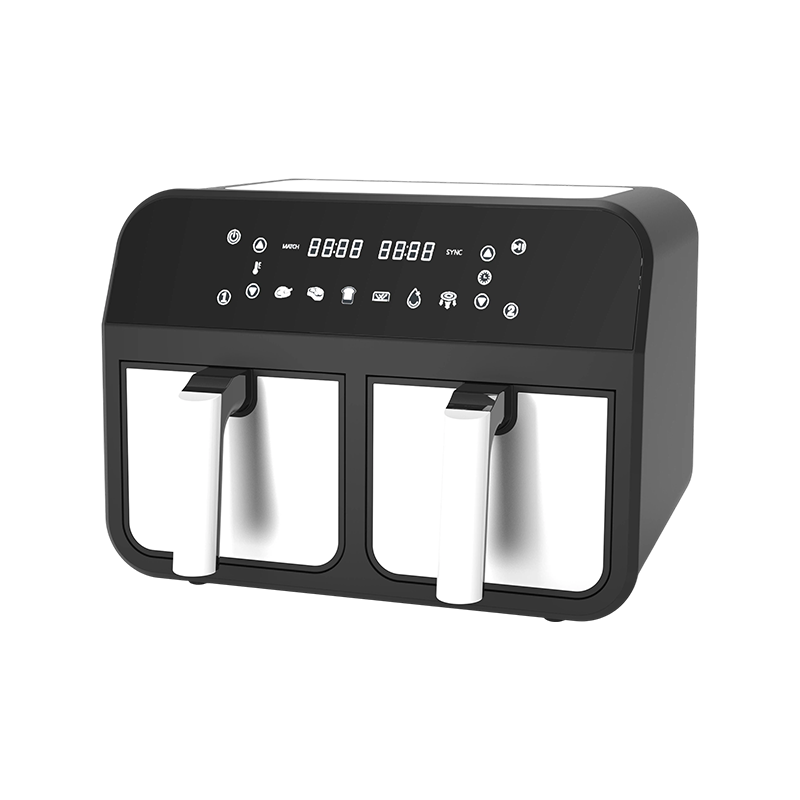
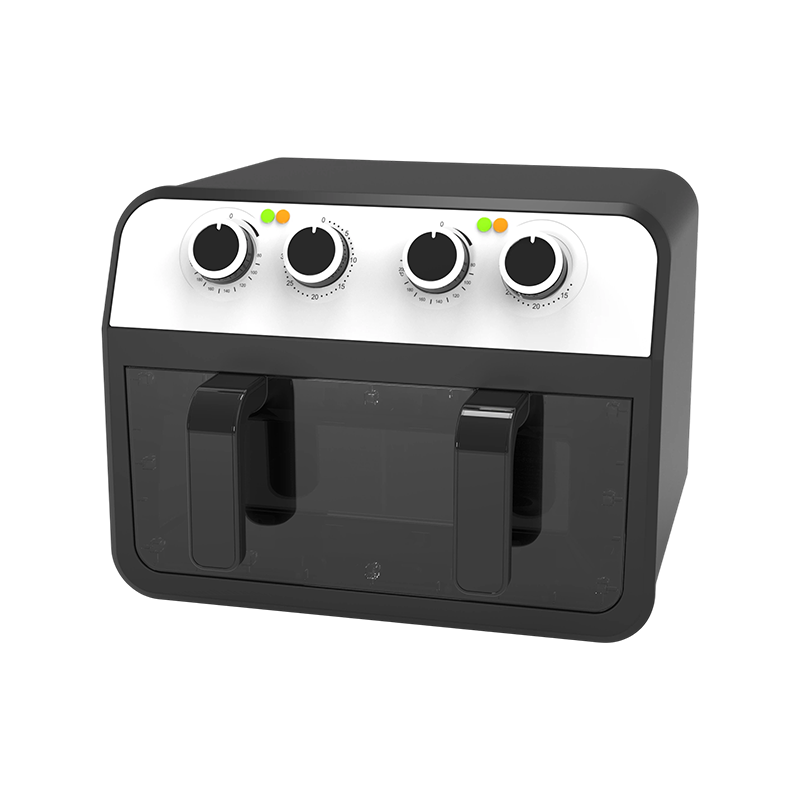
- Control interface. Manual dials suit high-turnover kitchens where staff change often; digital presets suit retail packaging where a clear feature list sells the unit.
- Documentation. Confirm which certification documents are available for your market and which tests are performed on production units rather than prototypes.
- Order flexibility. Ask about minimum order quantity, sample lead time, private label options and packaging customisation before you commit to a specification.
- Spare parts and after-sales. Trays, baskets and heating elements should be replaceable, and the supplier should be able to explain the process in writing.
As a manufacturer and supplier of air fryers alongside popcorn makers, cotton candy makers, chocolate fountains, ice makers, slush machines and milkshake makers, we work with both retail buyers and food service operators. That mix is useful when specifying a model, because a basket designed for a busy counter usually has to satisfy the stricter requirements of a home kitchen as well: consistent browning, simple cleaning and a control panel that does not require training.
Specify the basket, the coating and the documentation first, because those three decide how well a unit handles sticky Asian marinades in daily use.
Air Fryer Asian Chicken FAQ
What temperature should I use for air fryer Asian chicken?
Most cuts work well between 180 °C and 200 °C. Use 180 °C for bone-in pieces such as drumsticks and whole thigh fillets, 190 °C for wings, and 200 °C for small boneless cubes that need to brown quickly before they dry out.
Can I marinate the chicken overnight?
You can, but it is not always better. Soy-based marinades with acid will firm up the outer layer of the meat after a few hours. Thirty minutes to two hours gives good seasoning; if you want to prepare ahead, keep the sweetener and starch out of the overnight mix and add them just before cooking.
Do I need to add oil for air fryer Asian chicken?
A small amount helps. About 1 tablespoon of neutral oil per 500 g improves browning and keeps lean cuts from drying. For skin-on pieces, the skin's own fat does most of the work, and a light brush of oil is enough.
Can I cook frozen marinated chicken in an air fryer?
Yes, but add time and expect a softer crust. Frozen pieces release water as they thaw, so start at 170 °C for the first half of the cooking, drain any liquid from the basket, then raise the temperature to finish. Add the glaze only after the chicken is cooked through.
Why is my air fryer Asian chicken soggy?
Usually one of three things: the marinade was still dripping when the chicken went in, the basket was overloaded, or the glaze went on at the start and steamed rather than caramelised. Drain, dry and cook in a single layer, and the surface will firm up.
How do I keep the glaze from burning?
Apply it late. Cook the chicken to about 80 percent done, brush the glaze on, then return the basket for two to three minutes. Reduce the sweetener to 1 to 2 teaspoons per 500 g if the corners of the basket still darken too quickly.
Which cut is best for beginners?
Boneless thighs. They tolerate a couple of extra minutes, hold a marinade well, and stay juicy across a wider temperature range than breast meat.
How much chicken fits in one batch?
In a 4 litre basket, aim for 400 to 500 g in a single layer with small gaps. In a 6 litre basket, 700 to 800 g works well. Two uncrowded batches usually beat one full basket on both texture and total time.
If you remember only one answer from this section, make it the glaze timing one: late application prevents most burnt batches.
Working With Homease
Cixi Homease Electrical Products Co., Ltd designs and manufactures air fryers and other small kitchen appliances for home and commercial customers. If you are specifying an air fryer for retail, distribution or a food service menu, our team can walk you through basket configurations, control options, sample arrangements and custom design work before you place a bulk order.
Good air fryer Asian chicken is less about a secret ingredient and more about a handful of measurable decisions: how sweet the marinade is, how dry the surface is, how much space each piece gets, and when the glaze goes on. Get those four right and the appliance simply does its job. Get them wrong and no setting on the dial will compensate.
Related products



Get in Touch
Your email address will not be published.
Required fields are marked *
Required fields are marked *
contact us
Have a project in mind?
Contact with us
Contact with us
We are happy to answer your questions. Please fill out this form
and one of our professional team will get back to you as soon as possible.
and one of our professional team will get back to you as soon as possible.
-
Company AddressNO.212 Qiaotou Road, Qiaotou Town, Cixi City Zhejiang Province
-
Tel:+86-574-63032602/63032605/63032682/63032681
-
E-mail:homease@homease.com.cn
huajun_sam@homease.com.cn
jayden@homease.com.cn
sunny@homease.com.cn
Copyright © Cixi Homease Electrical Products Co., Ltd. All Rights Reserved. China Small Home Appliances Manufacturer Food Equipment Factory
