
 中文简体
 русский
 Français
 Español
 Português
 Deutsch
 عربى
 italiano
 Türk

Search
Categories
Recommend News
Categories
Recommend News
-
Industry News
-
Industry News
-
Industry News
-
Industry News
Oct 26, 2026 - By admin

Air Fryer Crispy Chicken Wings Recipe: Times, Temps, and Wholesale Tips
You pull the basket out of the air fryer, the wings look golden at the edges, and then the first bite tells the truth: the skin is soft, the coating slides off, and the crunch never arrives. Most cooks blame the machine. In practice, the machine is rarely the problem. Three variables decide the outcome of any air fryer crispy chicken wings recipe, and they are surface moisture, the temperature curve you run, and how much hot air can actually move around each piece.
Here is the answer before the explanation. Pat the wings completely dry, coat them with a small amount of oil plus either aluminum-free baking powder or cornstarch, cook at 380°F (193°C) for 16 to 18 minutes, then raise the temperature to 400°F (204°C) for 5 to 6 minutes to finish. Keep everything in a single layer, flip once, and pull the wings at 175°F (79°C) internal temperature for tender meat with a shattering skin. Sauce goes on at the last possible moment.
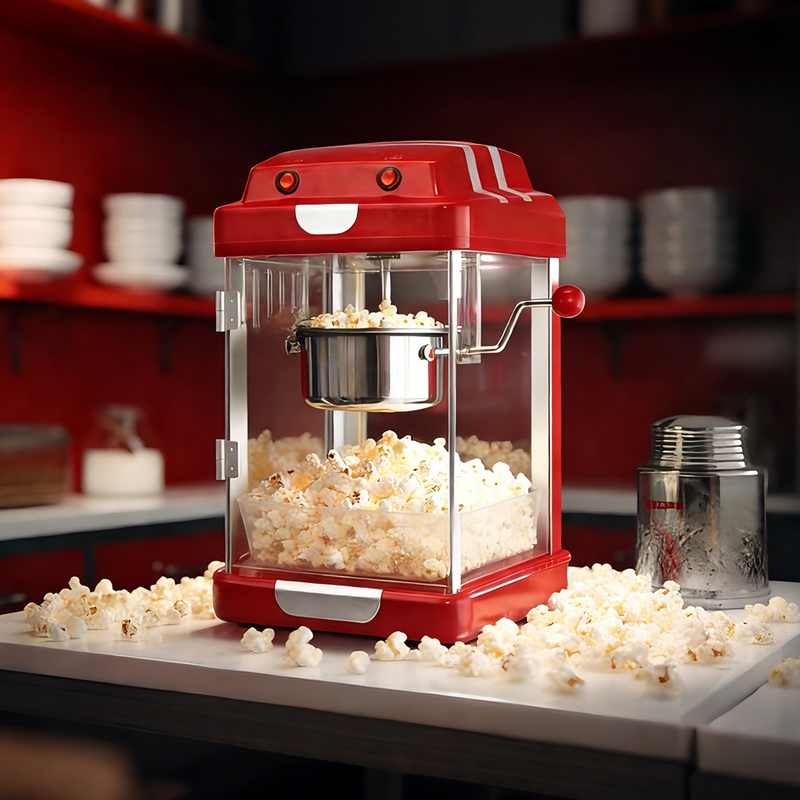
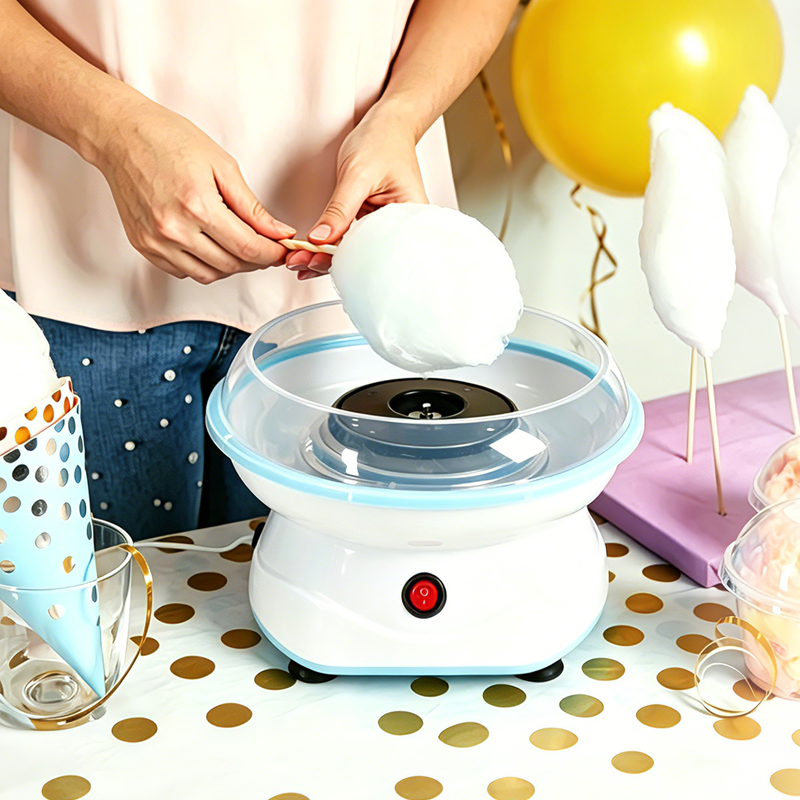
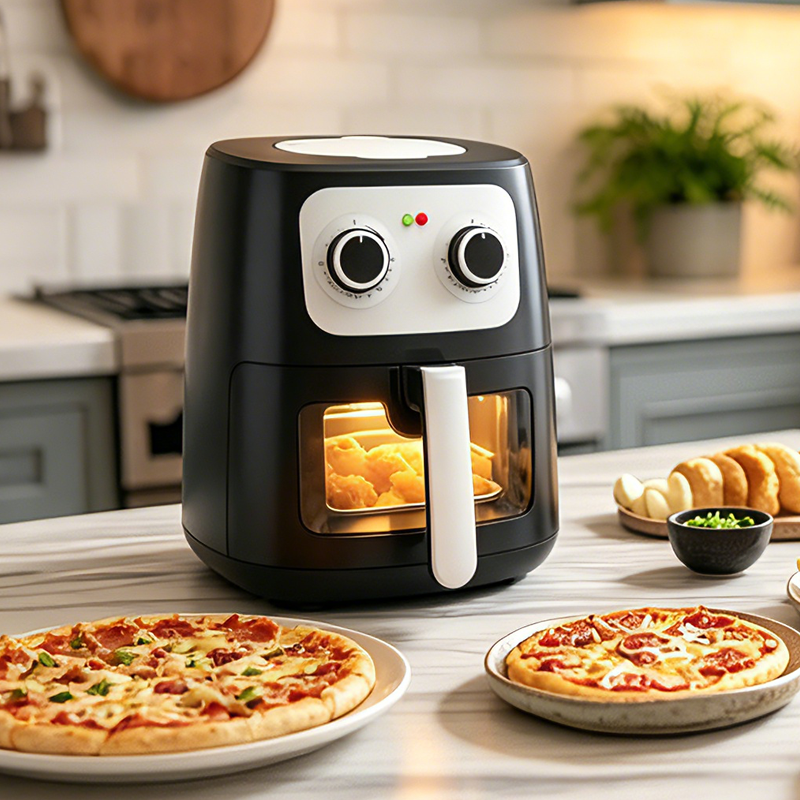
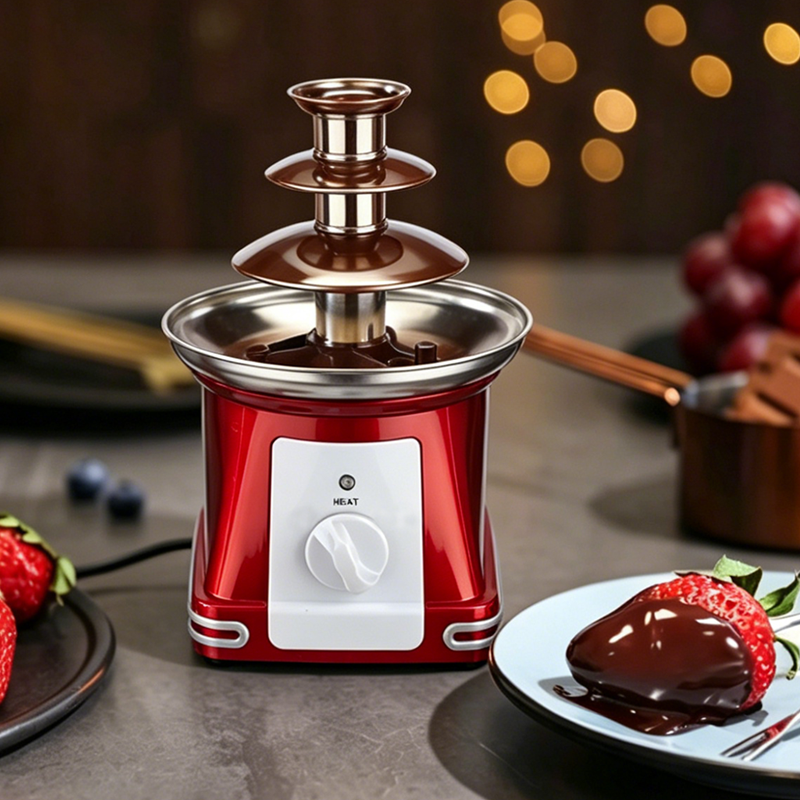
Everything below explains why that sequence works, how to adjust it for frozen wings, breaded wings, and large batches, and what commercial buyers should examine when they source air fryers for a home kitchen, a retail program, or a food service operation. This guide comes from the team at Cixi Homease Electrical Products Co., Ltd, a small kitchen appliance manufacturer that designs and builds air fryers, popcorn makers, cotton candy makers, chocolate fountains, ice makers, slush machines, and milkshake makers for household and commercial customers.
Crispy wings are a drying problem first and a seasoning problem second, so the recipe only works when the water is removed before the heat is applied.
Why Air Fryer Chicken Wings Turn Out Soft
An air fryer is a compact, fast convection oven. A fan pushes 380°F to 400°F air across the food at high speed, and that moving air evaporates moisture from the surface while the fat under the skin renders and browns. Crispiness happens when the skin dries out quickly enough to brown before the meat overcooks. Anything that slows evaporation, or blocks air from reaching the skin, works directly against that process.
Four causes cover almost every disappointing batch:
- Surface water. A rinsed, brined, or thawed wing carries a film of water. That water has to evaporate before the skin can brown, and while it evaporates, the skin steams. Drying with paper towels and then resting the wings uncovered in the refrigerator for a few hours removes most of it.
- Too little oil, or far too much. A thin oil film conducts heat and supports browning. A heavy pour pools in the basket and creates a wet layer under the skin. Roughly one tablespoon of neutral oil for two pounds of wings is the practical range.
- Crowding the basket. Wings that touch each other shield the contact zones from airflow. Two pounds of wings in a four-quart basket, arranged in one layer, is close to the working limit. Anything more and two batches will beat one crowded batch every time.
- A single flat temperature. Cooking at one low temperature for a long time dries the meat without crisping the skin. Cooking at one high temperature from the start browns the outside before the inside is safely cooked. A moderate stage followed by a hot stage solves both problems at once.
Equipment geometry matters more than most people expect. A shallow, wide basket exposes more skin per wing than a deep, narrow one, because air can sweep across the surface instead of tumbling over a pile. Wattage matters too. A higher-output unit recovers heat faster after the drawer opens, so the temperature does not sag in the middle of the cook. For buyers comparing models, these two details are often more predictive of wing quality than the number of preset programs printed on the front panel.
Wings crisp because moisture leaves the skin, not because the appliance is doing something unusual, so controlling water and temperature is the entire technique.
The Base Air Fryer Crispy Chicken Wings Recipe
This version works with fresh or fully thawed wings and scales cleanly from two pounds up to four pounds if your basket can hold them in a single layer. If it cannot, run two batches rather than one deep pile.
Ingredients
- 2 lb (about 900 g) chicken wings, split into flats and drumettes
- 1 tbsp neutral oil, such as canola or grapeseed
- 1 tsp aluminum-free baking powder
- 1 tsp kosher salt, or 3/4 tsp fine table salt
- 1/2 tsp garlic powder
- 1/2 tsp smoked paprika
- 1/4 tsp ground black pepper
- 1/4 tsp cayenne pepper, optional
Method
- Pat the wings thoroughly with paper towels. Pay attention to the folds around the joints, where water hides.
- Combine the baking powder, salt, garlic powder, paprika, black pepper, and cayenne in a small bowl.
- Toss the wings with the oil until every piece has a faint sheen, then sprinkle the dry mix over them and toss again.
- Let the coated wings rest for 10 minutes at room temperature, or cover them and refrigerate uncovered for up to 12 hours for a drier, crisper skin.
- Preheat the air fryer at 380°F (193°C) for 3 to 5 minutes. Preheating is not optional on most models because the basket walls need to be hot before the wings go in.
- Arrange the wings in a single layer, skin side up, without letting them touch.
- Cook at 380°F (193°C) for 16 to 18 minutes, flipping once at the halfway point and shaking the basket gently.
- Raise the temperature to 400°F (204°C) and cook for another 5 to 6 minutes to harden and brown the skin.
- Check the internal temperature with an instant-read thermometer. Wings are safe at 165°F (74°C), but they eat better at 175°F (79°C), where the connective tissue has softened.
- Rest for 3 minutes on a rack, not on a plate, then toss with sauce and serve immediately.
Temperature and Time Reference
| Wing Type | Stage One | Stage Two | Target Internal | Practical Note |
|---|---|---|---|---|
| Fresh split wings | 380°F, 16 to 18 min | 400°F, 5 to 6 min | 175°F | Best balance of crunch and juiciness |
| Whole fresh wings | 375°F, 22 to 25 min | 400°F, 4 to 5 min | 175°F | Flip twice because of the uneven shape |
| Frozen wings, no thaw | 360°F, 24 to 28 min | 400°F, 5 min | 165°F or above | Knock off ice crystals before cooking |
| Breaded or battered wings | 375°F, 14 to 17 min | None | 165°F | Spray lightly with oil to set the coating |
| Flats only | 400°F, 18 to 20 min | None | 175°F | Flats dry out faster than drumettes |
| Drumettes only | 380°F, 20 to 22 min | 400°F, 4 min | 175°F | Thicker meat needs the longer first stage |
The two-stage method is what separates a genuinely crispy wing from a merely cooked one, because the first stage cooks the meat and the second stage drives the last of the moisture out of the skin.
Temperature and Time: How the Curve Creates the Crunch
Not every preparation method produces the same surface. A dry-brined wing with baking powder behaves very differently from a wing that sat in a wet marinade for an hour, even when both are cooked at the same temperature for the same duration. The chart below summarizes the relative crispiness we see across common preparation routes, using a 100-point index where 100 represents the crunchiest result in a controlled comparison.
Relative Crispiness Index by Wing Preparation Method (100 = crispiest result in a controlled comparison)
Dry brine plus baking powder 95
Cornstarch coating 86
Patted dry, oil and spice rub only 72
Flour dredge, lightly sprayed 64
Wet marinade, cooked straight away 38
The gap between the top and bottom of that chart is not a small one. A wing that spends an hour in a wet marinade carries extra surface water and often extra sugar, and both of those slow browning. Moving the same flavor components into a dry rub, or brushing the marinade on after cooking, recovers most of the lost crunch without giving up the taste.
The middle of the chart is where most home cooks land, and it is also where equipment design starts to show. A basket with generous open area and a steady fan keeps the drying stage moving, while a tightly packed basket forces the same wing into the bottom third of the index. When we talk with buyers about air fryer performance for wings, the conversation usually comes back to airflow path, basket depth, and how quickly the heating element recovers after the drawer is opened.
Time behaves differently at each stage as well. During the first stage the goal is to render fat and cook the meat through, which is a steady, forgiving process. During the second stage the goal is a fast surface reaction, which is much less forgiving. Five minutes at 400°F can turn a good wing into a great one, and three extra minutes can turn it dry. That is why the final stage deserves attention rather than a timer set and forgotten.
The preparation method sets a ceiling on crispiness, and no temperature setting can lift a wet marinade above that ceiling.
Dry Rub, Baking Powder, Cornstarch, or Breading
Coating choices are not interchangeable, and each one has a failure mode. The table below compares the routes most cooks and commercial kitchens actually use.
| Coating | How It Works | Crispiness | Watch Out For |
|---|---|---|---|
| Baking powder plus salt | Raises surface pH and forms tiny bubbles that increase surface area | High | Must be aluminum-free; overuse leaves a metallic taste |
| Cornstarch | Gelatinizes and dries into a thin, glassy shell | High | Looks chalky if applied too heavily or unevenly |
| Flour dredge | Builds a classic browned crust that holds sauce well | Medium | Needs an oil spray or it stays pale and pasty |
| Wet marinade | Adds flavor and moisture before cooking | Low | Sugar burns before the skin browns; add after cooking instead |
| Salt and pepper only | Relies entirely on drying and rendered fat | Medium | Nothing on the surface to hold crunch once sauce is added |
For a home cook chasing maximum crunch, baking powder and cornstarch are the two practical winners, and they can even be combined at a two-to-one ratio of cornstarch to baking powder. For a commercial kitchen, flour dredges remain popular because they tolerate holding time better under a heat lamp, and they accept sauce without collapsing immediately.
One detail that gets overlooked: salt applied early changes the surface. A light salt application followed by an uncovered rest in the refrigerator pulls moisture to the surface and then lets it evaporate, which is a mild version of dry brining. The same technique applied for 12 hours produces a noticeably tighter, drier skin than a 10-minute rest, and it costs nothing but planning time.
Choose a coating based on how long the wings will sit before serving, not only on how they taste straight out of the basket.
Six Mistakes That Undo a Good Air Fryer Wing
Most failed batches trace back to one of these, and all six are easy to correct once you know what to look for.
- Starting from a wet wing. Rinsing under the tap and going straight into the basket is the single most common cause of soft skin.
- Overfilling the basket. A single layer is a real constraint, not a suggestion. Stacked wings steam each other from the inside out.
- Skipping the preheat. A cold basket means the first several minutes of cooking happen at a temperature well below the set point.
- Saucing too early. Sauce is water-based in most cases. Toss the wings and let them sit for ten minutes and the crust softens.
- Using a wet marinade and expecting a dry crust. Choose one goal. Marinate for flavor and accept a softer skin, or dry-brine for texture and add flavor at the end.
- Trusting the preset timer. Preset programs are written for average loads. Wing size, starting temperature, and basket fill all shift the real cooking time.
There is also a lesser-known mistake worth mentioning: resting wings on a plate. A plate traps steam underneath and returns moisture to the crust within a minute or two. A wire rack, even a cheap one, keeps air moving underneath and holds the texture far longer.
Resting wings on a rack instead of a plate preserves crunch for several minutes longer, which matters most when food is being plated for guests.
Scaling the Recipe for Parties, Retail, and Food Service
Doubling a wing recipe for a party works fine, provided the air fryer is not asked to do more than it can. Cook in batches, hold the finished wings on a rack in a 200°F oven, and sauce only the portions being served. Wings held in a warm oven for 20 minutes will lose some crunch, but they hold up far better than wings piled in a covered container.
For food service and retail programs, the priorities shift. Consistency across hundreds of servings matters more than peak crispness on a single plate, and that changes the equipment requirements. A commercial operation typically needs predictable recovery time between batches, a basket that can be loaded quickly without careful arranging, and a coating that survives a holding cabinet. Sauces are usually served on the side or brushed to order for exactly that reason.
This is also where working with the right manufacturing partner becomes practical rather than theoretical. Buyers evaluating air fryers for a restaurant line, a retail private label, or a distributor catalog are looking at volume commitments, customization options, and whether the factory can support a new product introduction from concept through to mass production. Those are the questions that determine whether a program launches on schedule.
Working With Homease
Cixi Homease Electrical Products Co., Ltd is a small kitchen appliance manufacturer that covers research, design, manufacturing, and sales under one roof. The company operates a 20,000 square meter manufacturing base with 300 employees and a daily output capacity of up to 10,000 units, which allows it to serve buyers placing both trial orders and ongoing volume orders.
The product range includes air fryers, popcorn makers in hot air, retro, and tabletop styles, cotton candy makers, chocolate fountains, ice makers, slush machines, and milkshake makers, all aimed at home kitchens, party and entertainment settings, retail channels, and food service applications. Custom design work, new product introduction support, sample display, and a standardized production management system are part of the offer.
Purchase teams, importers, distributors, and food service operators can submit an inquiry through the contact page to discuss specifications, sample arrangements, and order volumes.
Batch size and equipment capacity are linked more tightly than most buyers expect at the planning stage. A kitchen that needs 300 wings per hour needs a different basket strategy than one that needs 60, and that requirement should be settled before the appliance specification is locked.
At scale, the recipe and the equipment have to be designed together, because a coating that works at home may fail after 20 minutes in a holding cabinet.
What Buyers Look For in an Air Fryer for Chicken Wings
Whether you are buying one unit for a household or a container load for a retail program, the criteria that affect wing quality are surprisingly consistent.
Performance Criteria
- Basket volume versus usable volume. Rated capacity usually assumes a full load. Usable capacity for wings in a single layer is often 60 to 70 percent of the rated figure.
- Wattage and recovery. Higher wattage shortens the time to return to temperature after the drawer is opened, which keeps the second stage consistent.
- Temperature range and control accuracy. A wide range supports both the moderate and hot stages. Step control and sensor placement determine whether 400°F is actually 400°F.
- Basket geometry and coating. A shallow, wide basket with a durable non-stick surface cleans faster and cooks more evenly than a deep one.
- Timer behavior. A reliable auto-shutoff and a pause function that resumes cleanly matter in busy kitchens.
Sourcing Criteria
- Documentation. Certification records, test reports, and packaging compliance are the first items a serious buyer requests from an air fryer manufacturer.
- Customization. Private label work, color options, control panel changes, and packaging design separate a supplier from a trading company.
- Sample process. A short, well-defined sample timeline signals a factory that has run new product introductions before.
- Order flexibility. A manufacturer that can handle trial quantities and scale to volume reduces risk for importers and wholesalers entering a new category.
- Production management. Standardized operating procedures and in-process testing are what keep a second order identical to the first.
There is a practical test that costs nothing. Ask a potential supplier how their unit performs when the basket is loaded to about 70 percent of its rated capacity with wings at 380°F. A manufacturer with real production and testing experience will answer with specifics about recovery time and load behavior. A trading desk will answer with a marketing sentence. That single question tells an experienced buyer a great deal.
For buyers, usable basket volume and heat recovery time predict real cooking results far better than the preset program list on the box.
Frequently Asked Questions About Air Fryer Crispy Chicken Wings
What temperature makes chicken wings crispy in an air fryer?
Two temperatures work better than one. Start at 380°F (193°C) to cook the meat and render the fat, then finish at 400°F (204°C) for 5 to 6 minutes to brown and harden the skin. A single low temperature dries the meat without crisping, and a single high temperature browns the outside before the inside is cooked through.
Do I need oil to get crispy wings in an air fryer?
A small amount helps, but it is not the main driver of crunch. One tablespoon of neutral oil for two pounds of wings is enough to conduct heat and support browning. The crunch itself comes from removing surface water and cooking the skin at a high enough temperature to brown it.
Can I cook frozen chicken wings in an air fryer without thawing?
Yes, and it works reasonably well. Knock off any loose ice crystals, cook at 360°F (182°C) for 24 to 28 minutes, then finish at 400°F for about 5 minutes. Frozen wings release a lot of water as they thaw, so the first stage takes longer, and the final high-heat stage is doing more work than usual.
How long should I cook chicken wings in an air fryer?
Fresh split wings typically need 16 to 18 minutes at 380°F followed by 5 to 6 minutes at 400°F. Whole wings need 22 to 25 minutes at 375°F plus a short finish. Always confirm with a thermometer rather than relying only on the clock, because basket load and unit wattage shift the timing.
Why are my air fryer chicken wings not crispy?
In most cases the wings went into the basket wet, the basket was overcrowded, or the cook finished at a moderate temperature without a final high-heat stage. Fixing any one of those three usually produces a visible improvement on the next batch.
Does baking powder really make wings crispier?
It does, and the effect is measurable. Baking powder raises the pH of the skin surface and creates tiny carbon dioxide bubbles that increase surface area, which speeds up drying and browning. Use aluminum-free baking powder at about one teaspoon per pound of wings, and no more.
Can I make this air fryer crispy chicken wings recipe for a large group?
Yes, but plan on batches. Cook each batch to completion, hold the finished wings on a rack in a 200°F oven, and sauce them right before they go out. For operations serving hundreds of portions per service, the appliance specification, coating choice, and holding method need to be designed together.
How do I keep wings crispy after tossing them in sauce?
Toss and serve within a couple of minutes, or serve the sauce on the side. Most sauces are water-based, and water is exactly what softens a crisp crust. If sauce must be applied ahead of time, a thicker glaze applied in a thin layer holds texture longer than a thin, watery coating.
Almost every wing problem comes back to water, temperature curve, or crowding, and all three are under the cook's control.
A reliable air fryer crispy chicken wings recipe is not complicated, but it does demand a little discipline. Dry the wings properly, use a modest amount of oil with baking powder or cornstarch, cook in a single layer, run two temperature stages, and sauce at the end. Those five habits will outperform any preset button on the control panel.
The same logic scales upward. For households, the payoff is a better dinner on a weeknight. For importers, distributors, and food service operators, the payoff is an appliance specification that matches how wings are actually cooked and served, chosen together with a manufacturer that understands both the recipe and the production line behind it.
Get the water out, get the temperature curve right, and the air fryer will do the rest of the work every single time.
Related products



Get in Touch
Your email address will not be published.
Required fields are marked *
Required fields are marked *
contact us
Have a project in mind?
Contact with us
Contact with us
We are happy to answer your questions. Please fill out this form
and one of our professional team will get back to you as soon as possible.
and one of our professional team will get back to you as soon as possible.
-
Company AddressNO.212 Qiaotou Road, Qiaotou Town, Cixi City Zhejiang Province
-
Tel:+86-574-63032602/63032605/63032682/63032681
-
E-mail:homease@homease.com.cn
huajun_sam@homease.com.cn
jayden@homease.com.cn
sunny@homease.com.cn
Copyright © Cixi Homease Electrical Products Co., Ltd. All Rights Reserved. China Small Home Appliances Manufacturer Food Equipment Factory
