
 中文简体
中文简体 русский
 Français
 Español
 Português
 Deutsch
 عربى
عربى italiano
 Türk
Türk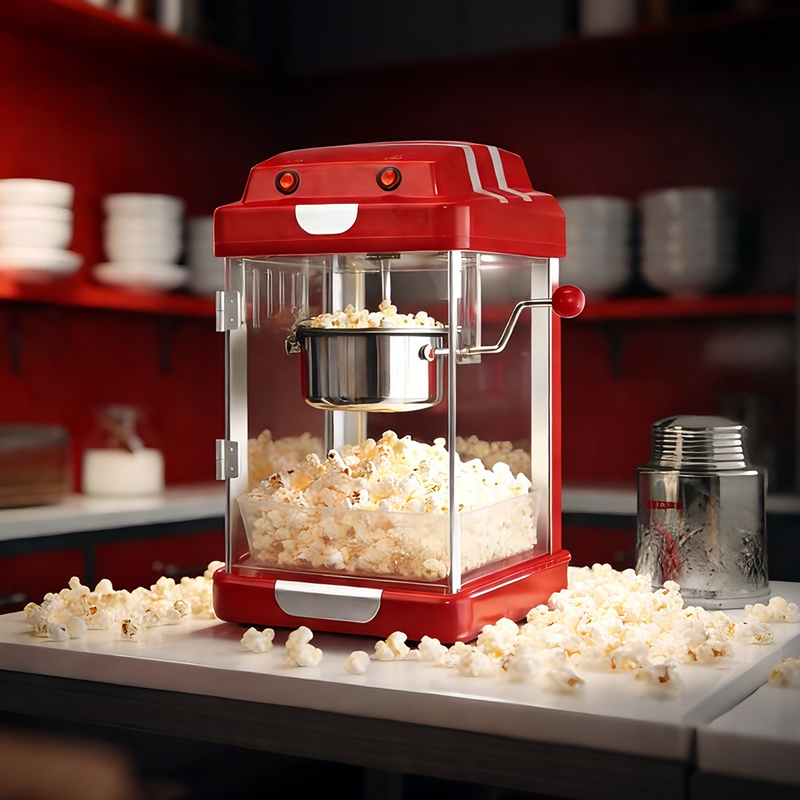

Search
Categories
Recommend News
Categories
Recommend News
-
Industry News
-
Industry News
-
Industry News
-
Industry News
Oct 12, 2026 - By admin

How to Make Popcorn in a Popcorn Maker: Step-by-Step Tips and Buying Guide
Picture a Friday evening. The film is queued, the bowls are out, and you tip a level scoop of kernels into the top of a popcorn maker. Ninety seconds later you are either pouring a light, crisp bowl of popcorn or scraping a chewy, half-popped mess out of the chamber. In our experience talking to both home users and commercial buyers, the difference almost never comes down to how much the machine cost. It comes down to five things you control: how much corn you load, whether the chamber was preheated, how fresh and moist the kernels are, the moment you cut the power, and how fast you get the popcorn out of the heat.
This guide covers how to make popcorn in a popcorn maker from the practical end of the process, the side most instruction leaflets skip. It is written for people who own a hot air machine, a retro oil-kettle model, or a tabletop popper, and also for buyers who order popcorn makers by the container load for cinemas, convenience stores, party rental firms, or their own retail brand. Homease is a popcorn maker manufacturer based in Cixi, China, with hot air, retro, and tabletop models in its range, and we speak with both kinds of customers every week. The advice below is drawn from what actually produces good popcorn on a countertop and what actually keeps a commercial popcorn program running.
Short answer: good popcorn in a popcorn maker comes down to loading the chamber to the correct line, preheating properly, using kernels with the right moisture, and pulling the popcorn the second the popping slows to a crawl.
How to Make Popcorn in a Popcorn Maker: The Quick Answer First
Before the details, here is the method that works on almost every design, from a compact hot air unit to a stirring kettle. Read this list, then work through the sections that follow for the reasoning and the exceptions.
- Preheat for 2 to 3 minutes on any machine with a metal chamber or kettle. Hot air models benefit from a 60-second warm-up. Cold metal pulls heat out of the first kernels, which is why the first batch of the day is often the worst.
- Measure kernels with the scoop that came with the machine. Never fill past the fill line stamped inside the chamber. Overloading is the single most common cause of chewy popcorn, unpopped kernels, and scorched flavour.
- Use kernels at roughly 13 to 14 percent moisture. That is fresh, properly stored popcorn. Old kernels that have dried out to 11 percent or below will pop small, tough, and loud.
- Add oil only to machines designed for it. A hot air chamber takes no oil inside. A kettle or tabletop popper needs a measured amount, usually one tablespoon per two ounces of kernels.
- Cut the power when popping slows to one or two pops per second. Do not wait for the last kernel. The final thirty seconds of a cycle are where scorching happens.
- Empty the chamber within 30 seconds. Popcorn held over a hot base keeps cooking and turns rubbery from trapped steam.
- Season in layers, not in one dump. A light oil or clarified butter mist plus salt in two or three passes coats evenly and keeps the batch crisp.
If you only remember one rule: stop the cycle early and dump the popcorn fast. Timing at the end of the cycle matters more than any ingredient you add.
Hot Air, Retro, and Tabletop: Know Which Machine You Are Feeding
The three popcorn maker families behave differently, and the same instructions do not apply to all of them. A hot air popcorn maker pushes a stream of heated air through a chamber, so the kernels never touch oil and the popcorn comes out dry and light. A retro popcorn maker uses a heated kettle with a stirring arm and a measured dose of oil, which gives a heavier, buttery bite but needs cleaning after every session. A tabletop popcorn popper sits somewhere between the two, often a plug-in base with a thin aluminium pan and a lid that doubles as a serving bowl.
The practical difference for anyone learning how to make popcorn in a popcorn maker is heat transfer speed. Air heats slowly and unevenly compared with oil, so hot air units need smaller loads and a preheat, while kettle machines are more forgiving on load size but punish you with burnt flavour if the oil is too hot or the kettle is not wiped clean between batches.
| Machine type | Heat method | Typical batch time | Best suited to | Main watch-out |
|---|---|---|---|---|
| Hot air popcorn maker | Forced hot air, no oil in chamber | 1.5 to 2.5 minutes | Everyday snacking, lighter results, small kitchens | Seasoning slides off dry popcorn if you do not use a light oil mist |
| Retro popcorn maker | Oil in a heated stirring kettle | 3 to 4 minutes | Family movie nights, classic buttery flavour | Kettle must be wiped clean each batch or flavour carries over |
| Tabletop popcorn popper | Oil on a flat heated pan, manual or motorised stirring | 3 to 5 minutes | Small parties, retro styling, portion control | Thin pans heat unevenly and need constant motion |
| Commercial cart or counter unit | Large oil kettle with dump mechanism | 2 to 3 minutes per cycle | Cinemas, stadiums, retail counters, rental fleets | Back-to-back batches without a cool-down will trip thermal protection |
If you are buying rather than using, the table above is also a quick way to match a model to a channel. A hot air unit suits a home kitchen or a hotel room amenity. A kettle machine suits a party rental company that wants the smell of butter in the room. A cart or high-volume counter unit suits a venue that measures output in servings per hour rather than bowls per evening.
Why Cycle Time Matters More Than Wattage
Buyers often compare popcorn makers by wattage, but the number that changes your evening is cycle time plus recovery time. A 1,200-watt hot air machine that finishes a small batch in 90 seconds will out-serve a 1,400-watt kettle that needs four minutes and a five-minute cool-down. When a manufacturer quotes a daily output figure, ask whether that assumes continuous operation or realistic intervals between batches.
Match the machine to the job: hot air for light everyday bowls, oil kettles for buttery party batches, and a commercial kettle when you need servings per hour rather than bowls per evening.
Batch Timing Across Popcorn Maker Types
Timing is where most first attempts go wrong, so it helps to see the typical cycle length side by side. The figures below are working ranges from everyday use, not laboratory measurements; your own machine, load size, and room temperature will shift them slightly.
The chart makes one thing obvious: a commercial kettle is faster per batch than most home machines, but only if you leave recovery time between cycles. A hot air unit looks quick, yet its small chamber means you may run three loads to match one kettle load, and each load has its own preheat penalty.
For a home user, the takeaway is to plan around total time, not one cycle. Three hot air batches with a one-minute warm-up between them takes roughly eight minutes end to end, which is still faster than one kettle batch plus a full cool-down and wipe-down. For a retail or food service operator, the takeaway is the opposite: a kettle cart with a two-minute cycle can genuinely serve a queue, provided you stagger the loads and keep a spare kettle on rotation.
When we build popcorn maker units for wholesale customers, we usually ask which number matters more to them, batches per hour or servings per batch. A party rental company almost always chooses the second. A convenience store that sells small bags chooses the first.
Compare total time including preheat and cool-down, because per-batch speed alone tells you almost nothing about how many bowls you actually get in an evening.
Kernel Choice and Moisture: The Variable Nobody Checks
Popcorn kernels are not a commodity you can swap without consequence. Two things matter most: moisture content and kernel shape. Fresh popcorn holds roughly 13 to 14 percent internal moisture, and that water is what turns to steam and ruptures the hull. Kernels that have been sitting in an open jar for a year dry out, and dry kernels produce small, hard, oddly shaped popcorn with far more unpopped leftovers.
How to Test Kernels Without Special Equipment
Drop ten kernels into a small pan with a tablespoon of oil, cover, and count. If eight or more pop fully within a couple of minutes, the kernels are good. If you get five or six, the batch will disappoint no matter which popcorn maker you use. This test costs two minutes and saves an entire evening.
Butterfly and Mushroom Shapes
Most supermarket popcorn is butterfly type, which pops into irregular, tender flakes. Mushroom type pops into round balls and holds up better under coatings, which is why it is common in confectionery and caramel lines. Neither is better in the abstract. If you plan to coat popcorn heavily, mushroom kernels give you a better surface and fewer broken pieces. If you want light, tender snacking popcorn from a hot air machine, butterfly kernels work fine.
Storage That Preserves Moisture
- Keep kernels in an airtight glass or thick plastic container, not the original paper bag once it is opened.
- Store away from the stove, the oven, and direct sunlight. Heat drives moisture out of the kernel.
- Buy in quantities you will finish within three to four months rather than a five-kilogram sack that sits for a year.
- Never refrigerate kernels. Condensation on the surface creates uneven popping and gummy residue in the chamber.
For commercial buyers, kernel specification is part of the purchase contract, not an afterthought. Ask your supplier for the moisture range, the tested pop expansion ratio, and the percentage of unpopped kernels under a standard test method. A popcorn maker that performs well with a 44-gram test load at 13.5 percent moisture may look weak with dry kernels, and that is a raw-material issue rather than a machine fault.
Test ten kernels before you blame the machine: if fewer than eight pop well, the popcorn maker is usually innocent and the kernels are the problem.
Step-by-Step: How to Make Popcorn in a Popcorn Maker
The sequence below assumes a standard machine with a chamber or kettle and a single on-off control. Adjust only where your model differs.
Step 1: Set Up and Measure Before You Switch On
Put the machine on a stable, heat-resistant surface with clearance around the vents. Measure your kernels into a cup or the supplied scoop, and measure your oil if the machine takes oil. Doing this before the machine is hot removes the panic that causes overloading. As a working guide, one ounce of kernels by weight yields roughly one quart of popped corn, so a two-ounce load fills a two-quart bowl once the popcorn settles.
Step 2: Preheat the Chamber
Run the machine empty for two to three minutes, or sixty seconds for hot air models. You will feel the difference immediately: kernels hit a hot surface and start popping within seconds rather than rattling around while the element catches up. Preheating is especially useful on cold mornings and in air-conditioned rooms where ambient temperature drops the chamber below ideal.
Step 3: Load Correctly
Pour kernels in evenly rather than in one heap. On a kettle, add oil first, let it coat the base, then add kernels. On a hot air machine, never add oil, butter, or sugar into the popping chamber; those belong on the popcorn after it leaves the machine.
| Chamber or kettle size | Kernels | Oil (kettle models) | Popped output | Roughly serves |
|---|---|---|---|---|
| 2 oz (about 60 g) | 1/4 cup | 1 tablespoon | About 2 quarts | 1 to 2 people |
| 4 oz (about 115 g) | 1/2 cup | 2 tablespoons | About 4 quarts | 3 to 4 people |
| 6 oz (about 170 g) | 3/4 cup | 3 tablespoons | About 6 quarts | 5 to 6 people |
| 8 oz (about 225 g) | 1 cup | 4 tablespoons | About 8 quarts | 8 to 12 people |
Step 4: Listen, Do Not Watch the Clock
Every popcorn maker has its own rhythm, and the sound tells you more than the timer. Early in the cycle you hear a rapid crackle. As the batch finishes, the pops space out. When you reach one or two pops per second, cut the power. Waiting for silence means the last thirty seconds have been spent scorching the kernels already at the bottom of the chamber, which is where that faint burnt note comes from.
Step 5: Empty Immediately and Completely
Tip the popcorn into a wide, breathable bowl. A deep sealed container traps steam and turns the batch soft within minutes. If you are making several batches, keep finished popcorn in a low oven or an insulated serving bowl rather than stacking it in a closed tub.
Step 6: Season in Stages
Mist with a light oil or clarified butter, then salt, then repeat once or twice. A single heavy pour of melted butter soaks the bottom half of the bowl and leaves the top half plain.
Load less than you think you need, listen for the slowdown, and empty the chamber within half a minute; those three habits fix most popcorn problems before they start.
Butter, Oil, and Seasoning Without Soggy Popcorn
Wet toppings are the fastest way to ruin a good batch. Real butter contains water, and water is what makes popcorn wilting. The fix is simple: use clarified butter or ghee when you want butter flavour, because clarifying removes most of the water and milk solids. If you only have regular butter, melt it slowly, skim the foam, and use the clear layer underneath.
Oil Choices for Kettle Machines
Coconut oil gives a clean, slightly sweet base and a high smoke point, which is why it is popular in commercial popping. Refined sunflower and canola oils are neutral and inexpensive. Olive oil works but its flavour competes with toppings and its lower smoke point makes scorching easier at high kettle temperatures. Whatever you choose, measure it. Too little oil leaves kernels dry and unpopped; too much leaves a greasy film on the bowl and inside the kettle.
Salt, Powder, and Coating Order
- Use fine salt, not coarse flakes, so it sticks to the popcorn surface rather than falling to the bottom.
- Add powdered cheese or seasoning blends while the popcorn is still slightly warm, not piping hot, so the powder does not clump.
- For caramel or chocolate coatings, work in small batches and spread the popcorn on a tray first; a crowded bowl traps moisture.
- Keep a small amount of seasoning aside and add it at the table. Freshly added salt tastes stronger than salt that has sat on the popcorn for an hour.
What Not to Put in the Popping Chamber
Sugar, chocolate, wet butter, and thick sauces do not belong inside a hot air chamber or a standard kettle. Sugar burns onto the element or the kettle base, and the residue is difficult to remove without scratching the surface. Coat after popping, always.
Keep water out of the popping chamber and clarify your butter before it goes anywhere near the bowl; flavour belongs on the popcorn, not inside the machine.
Where the Money Goes in a Popcorn Program
Operators often ask whether the machine or the consumables dominate running costs, and the honest answer is that consumables do, usually by a wide margin. The split below is an illustrative planning model rather than a quote, but the shape of it holds across most small and mid-size popcorn programs we hear about.
Two conclusions follow for anyone budgeting. First, the machine purchase is a small share of total cost over a year, which means buying a slightly stronger unit with better temperature control is usually cheaper than saving on hardware and losing batches to scorched results. Second, because kernels dominate, the quality of your kernel supply matters more to your margin than almost any other decision.
This is also why buyers who order popcorn makers for retail and food service tend to negotiate kernels and machines together. A supplier who can advise on kernel specification and moisture tolerance is more useful than one who only ships the box. For our part, we build units that hold a stable chamber temperature across a long service day, because consistency is what protects a raw-material budget.
Hardware is the smallest line in a popcorn budget: spend on temperature consistency and kernel quality, not on the lowest possible machine price.
Cleaning, Storage, and Daily Maintenance
A popcorn maker is one of the easiest appliances to keep in shape, provided you clean it while it is still warm rather than after it has fully cooled. Burnt oil residue hardens as it cools and becomes far harder to shift without abrasives.
After Every Session
- Unplug the machine and let it cool until it is warm but comfortable to touch, usually five to ten minutes.
- Wipe the kettle or chamber with a soft cloth or paper towel to lift oil film. On kettles with a stirring arm, wipe around the arm rather than tugging at it.
- Empty and rinse the lid and serving bowl with warm soapy water if the manufacturer allows it.
- Wipe the exterior with a damp cloth. Never submerge a machine with an electrical base.
- Leave the lid off overnight so any trapped moisture escapes.
Weekly and Monthly
- Check the kettle surface for darkened patches. A paste of baking soda and water lifts light polymerised oil without scratching.
- Inspect the power cord and plug for heat damage.
- On hot air machines, brush loose hull fragments out of the popping chute; buildup restricts airflow and lengthens cycle times.
- On kettle machines, check the stirring arm for wobble and tighten if the manufacturer provides an accessible fitting.
Storage Between Uses
Store the machine with the lid ajar in a dry cupboard. In humid climates, moisture inside a sealed chamber encourages a musty smell and can affect the first batch. If the machine lives on the counter, keep it away from the sink where splash and steam collect.
For rental fleets and food service counters, build a simple daily checklist into the routine: wipe after each batch, full clean at close, arm check weekly, cord check monthly. Fleets that follow this pattern typically see far fewer mid-season failures than fleets that clean only when the machine looks dirty.
Clean hot, never wet the electrical base, and store with the lid ajar; those three habits add years to a popcorn maker with almost no effort.
Troubleshooting: Chewy, Burnt, or Half-Popped Results
When a batch disappoints, the cause is usually visible in the popcorn itself. Use the table below to work backwards from the symptom rather than changing several variables at once.
| Symptom | Likely cause | Correction |
|---|---|---|
| Chewy, rubbery popcorn | Kernels too dry, chamber overloaded, or popcorn left in a sealed container | Use fresher kernels, reduce the load by about 20 percent, and move popcorn into a wide bowl immediately |
| Many unpopped kernels left | Kernel moisture below 13 percent, chamber not preheated, or load above the fill line | Run the ten-kernel test, preheat for 2 to 3 minutes, and measure with the supplied scoop |
| Scorched or bitter taste | Oil too hot, kettle not wiped between batches, or the cycle ran past the slowdown | Wipe the kettle after each batch, check the thermostat, and cut power at one to two pops per second |
| Popcorn flying out of the chute | Overloaded chamber or lid not seated correctly | Reduce the load and check that the lid or chute deflector is properly in place |
| Soggy popcorn after adding butter | Whole butter with high water content added in one pour | Switch to clarified butter or ghee, or mist a light oil and add salt in layers |
| Machine shuts off mid-batch | Thermal cut-out triggered by back-to-back batches or a blocked vent | Allow a cool-down between batches and clear dust from vents and the chute |
| Uneven popping, some burnt and some raw | Thin pan or worn kettle base creating hot spots | Stir more consistently or replace the kettle; check whether the base is warped |
| Weak, small popcorn | Old kernel stock or mushroom-type kernels used where butterfly was expected | Refresh your kernel supply and confirm the kernel type matches the result you want |
One note on thermal cut-outs: they are a protective feature, not a defect. Repeated tripping usually means the duty cycle is too aggressive for the model, and the practical answer is either a larger kettle or a staggered production schedule. If a machine trips on its very first batch after a full cool-down, that is worth reporting to the supplier because it can indicate a thermostat calibration issue.
Change one variable per batch when troubleshooting, and record it; guessing at three causes at once is how a simple kernel problem becomes a machine complaint.
Matching a Popcorn Maker to Home, Party, Retail, and Food Service
Volume planning is straightforward arithmetic once you know one number: roughly one ounce of kernels by weight produces about one quart of popped corn. From there, decide how many servings you need per hour and work backwards.
Home Kitchens
A 2-ounce hot air machine covers one or two people in under three minutes including preheat. If two adults and two children are watching a film, plan on two batches of a 4-ounce load rather than one enormous batch, because an overloaded chamber is the main reason home popcorn comes out tough.
Parties and Rental Fleets
Rental companies tend to prefer retro kettle machines because the visible kettle and the smell of butter are part of the experience. A 6-ounce kettle producing roughly 6 quarts per cycle will serve around six people generously, and a well-managed rotation of two kettles can keep a small queue moving. Build the schedule around cleaning time, not just popping time.
Retail Counters and Convenience Stores
Portion control matters more than peak speed here. You want consistent bag or cup fills with minimal waste, which points to a kettle with a reliable dump and a steady warm-holding area that does not steam the popcorn. Popcorn held under a heat lamp with no airflow will soften within twenty minutes, so plan small frequent batches rather than one big morning load.
Food Service and Entertainment Venues
Cinemas, arcades, and stadium kiosks need output measured in servings per hour plus a service plan. That means asking about spare kettles, thermostats, stirring motors, and whether the supplier stocks consumables that match the machine. Downtime on a Friday night costs far more than the difference in unit price between two models.
Plan around servings per hour, not bowl size: small frequent batches consistently beat one large batch in both quality and waste.
What Wholesale and OEM Buyers Should Check Before Ordering
If you are sourcing popcorn makers for a retail brand, a distribution business, or a chain of venues, the questions you ask before placing an order determine how smooth the next two years will be. Price per unit is only one line in that calculation.
Specification Questions
- Voltage and plug standard. Confirm the exact configuration for each destination market, and ask for the plug type in writing rather than assuming.
- Chamber or kettle material and thickness. Thin aluminium warps and creates hot spots; ask for the actual thickness rather than a general claim.
- Thermostat and safety cut-out behaviour. Request the trip temperature and recovery time.
- Power rating under load. A unit rated at a nominal figure may draw more during preheat, which matters for venues with limited circuits.
- Cycle time and rated batch output. Ask for the test conditions used to produce any quoted output figure.
Commercial and Compliance Questions
- Which certifications apply to the model and the destination market, and can the certificate scope be shown for that specific model number?
- What documentation ships with the carton: manual, warranty card, and any required language versions?
- What is the packaging specification, and how does it perform in a stacked container shipment?
- Which spare parts are recommended for a two-year service plan, and are they available separately?
Supplier Capability Questions
Ask about production capacity, sample lead time, and how a custom colour or logo project is handled from artwork to mass production. For buyers exploring OEM or ODM work, the useful answer describes a new product introduction process with defined stages, not a promise of quick turnaround. Homease operates a 20,000 square metre manufacturing base with around 300 employees and a daily capacity of up to 10,000 units, and its stated capability includes custom design plus patent-backed structural, functional, and process development. Those are the kinds of concrete numbers worth comparing across suppliers rather than vague claims of quality.
Finally, ask who handles after-sales. A manufacturer that treats spare parts and technical support as part of the deal is usually a better long-term partner than one whose quote ends at the loading dock.
For wholesale and OEM popcorn maker orders, verify plug standard, material thickness, certificate scope, and spare parts availability in writing before you discuss price.
A Small Module: Where These Machines Sit in a Broader Kitchen Range
Popcorn makers rarely sell alone. Retailers, rental companies, and food service operators usually build a small appliance lineup around the same buying occasion, so it helps to see the popcorn maker as one item in a family of countertop and event appliances.
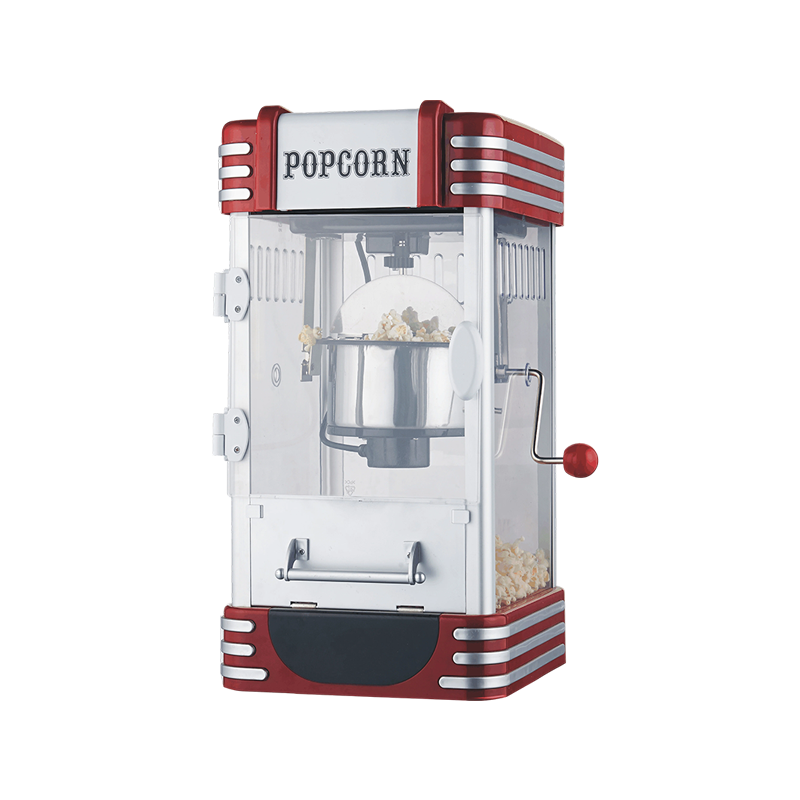
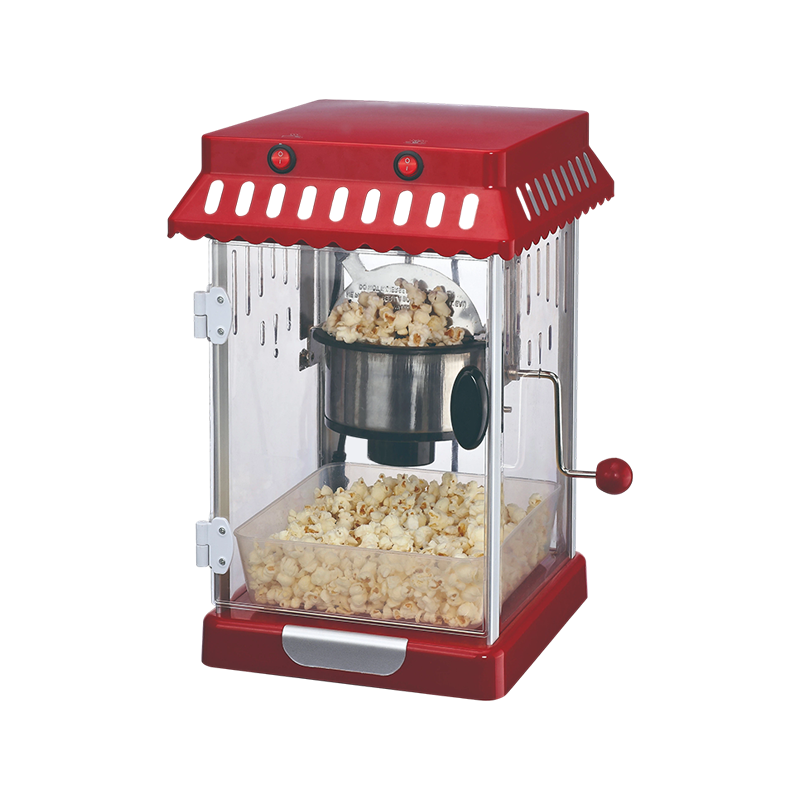
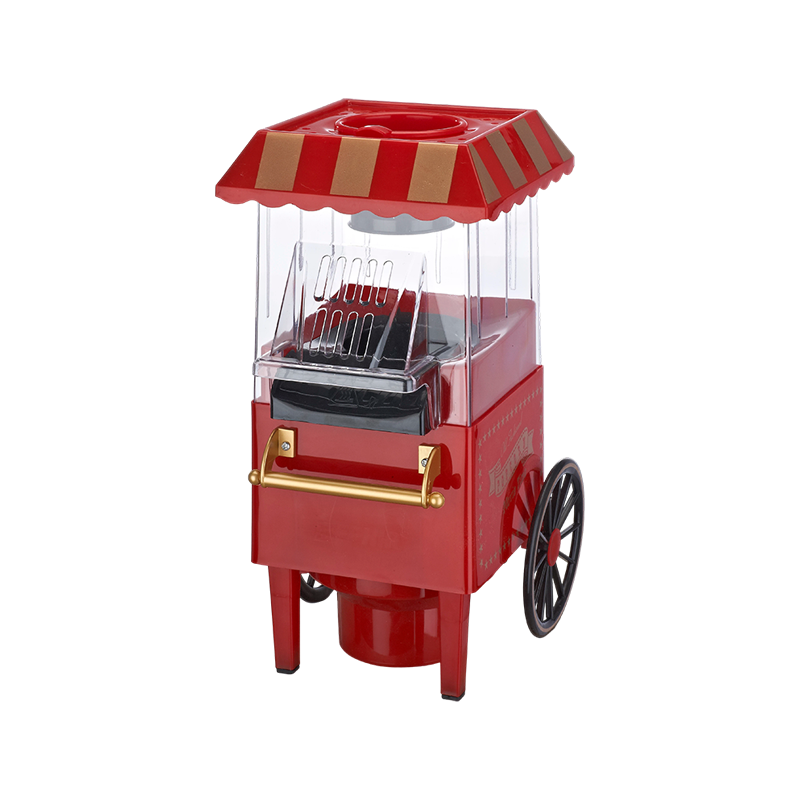
- Popcorn makers in hot air, retro kettle, and tabletop popper formats, covering light everyday snacking through to buttery party batches.
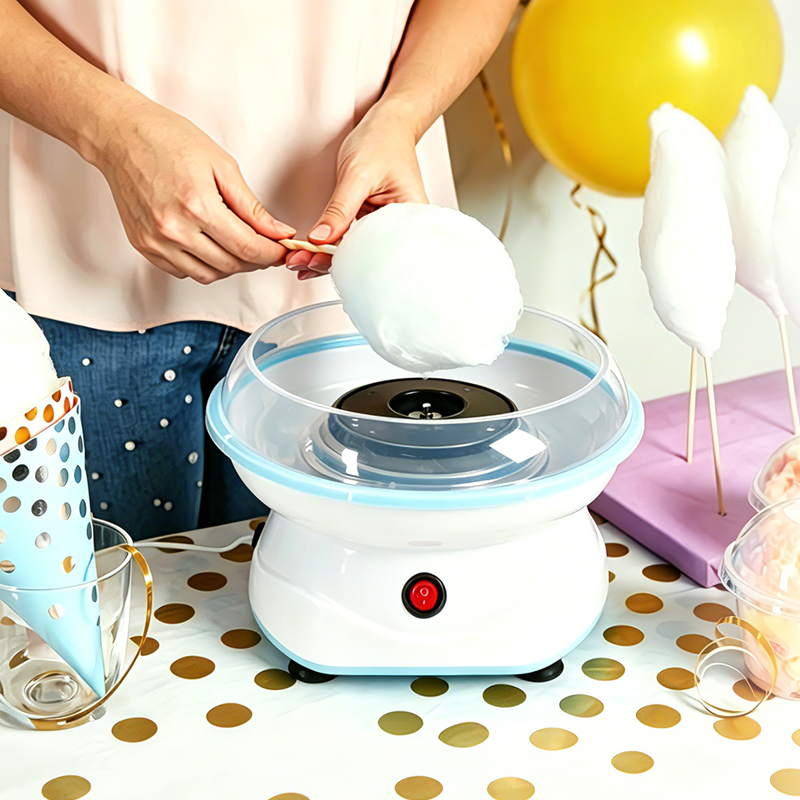
- Cotton candy makers for fairs, parties, and entertainment venues that pair sweet snacks with popcorn.
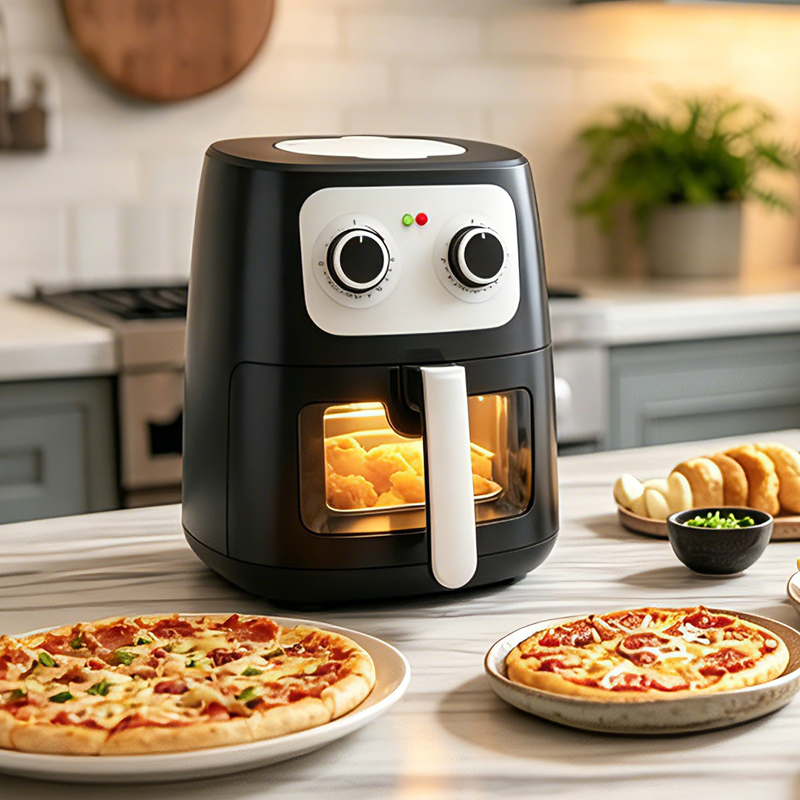
- Air fryers for the everyday cooking counter, useful for buyers assembling a general kitchen appliance range.
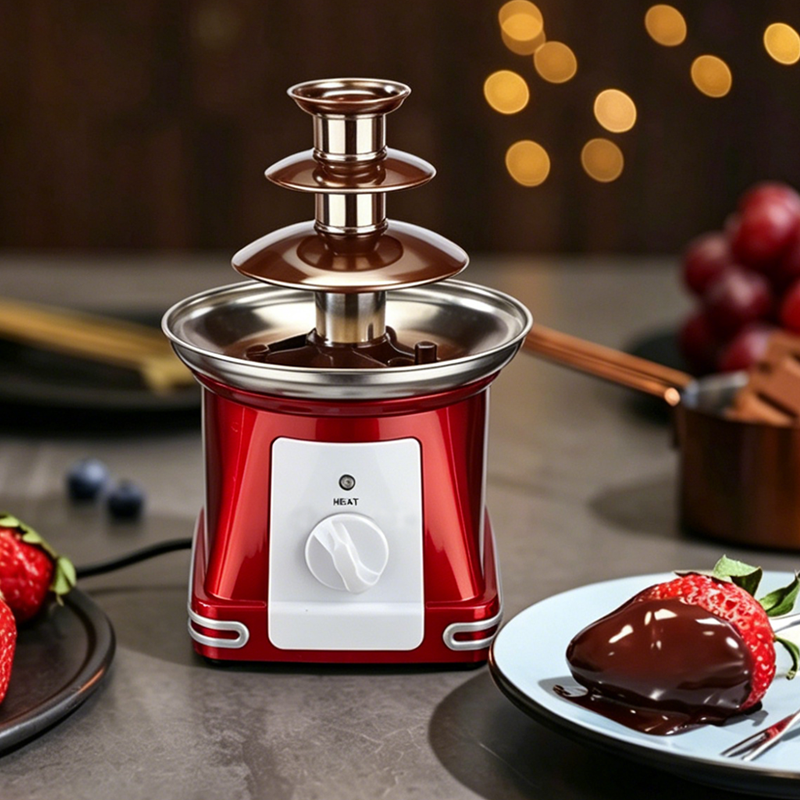
- Chocolate fountains for dessert tables, weddings, and hotel buffets.
- Ice makers for beverage service and small commercial kitchens.
- Slush machines for convenience stores, cinemas, and seasonal drink programs.
- Milkshake makers for cafes, dessert shops, and family use.
For a buyer, the practical benefit of a single supplier across these categories is consistency: the same voltage platform, the same carton standards, and one point of contact for spare parts. For a home user, it simply means the popcorn maker you bought probably has siblings on the same shelf.
Buying popcorn makers alongside related snack appliances from one manufacturer usually simplifies spare parts, packaging standards, and after-sales support.
FAQ: How to Make Popcorn in a Popcorn Maker
How much popcorn should I put in a popcorn maker?
Use the scoop supplied with the machine and never go past the fill line inside the chamber. For a hot air unit, that is usually a quarter cup or less. For a kettle, follow the ounce rating: a 4-ounce kettle takes roughly half a cup of kernels and two tablespoons of oil. If you are unsure, start with 20 percent less than you think you need and increase next time. Underloading costs you one small batch; overloading costs you the whole bowl.
Do I need oil in a hot air popcorn maker?
No. A hot air chamber is designed to pop with air alone, and adding oil inside it causes smoke, residue, and uneven popping. If you want butter flavour, apply it after the popcorn leaves the chamber using clarified butter or a light oil mist.
Why is my popcorn chewy instead of crisp?
Three causes cover most cases: kernels that have dried out below roughly 13 percent moisture, an overloaded chamber that traps steam, and popcorn left sitting in a sealed container. Fix the kernels first, then reduce your load, then change how you store the finished popcorn.
How long does it take to make popcorn in a popcorn maker?
A hot air machine typically finishes a small batch in 90 seconds to two and a half minutes. A retro kettle takes three to four minutes. Add two to three minutes of preheat and a cool-down if you are running multiple batches. Total time for an evening's worth of popcorn is usually under ten minutes regardless of machine type.
Can I add butter inside the popcorn maker?
Not in a hot air chamber, and not in a kettle unless the manufacturer specifically built a butter-melting tray for it. Butter contains water, which creates steam, spatter, and burnt residue on hot surfaces. Melt it separately and apply after popping.
How do I clean a popcorn maker without damaging it?
Unplug it, let it cool to warm, and wipe the kettle or chamber with a soft cloth while the oil film is still soft. Never submerge the electrical base, never use metal scouring pads, and leave the lid off overnight so moisture escapes.
How many people does one batch serve?
As a rule of thumb, one ounce of kernels by weight yields about one quart of popped corn. A 2-ounce load suits one or two people, a 4-ounce load suits three or four, and a 6-ounce kettle load comfortably serves five or six at a party.
Can I use the same kernels in a commercial machine and a home machine?
Yes, provided the moisture content sits in the right range. Commercial operators usually specify a tested moisture band and a maximum percentage of unpopped kernels, and those same kernels work well in a home kettle or hot air unit. What differs is the load size and the tolerance for variation.
What should a wholesaler check when sourcing popcorn makers?
Plug and voltage standard for each market, kettle or chamber material thickness, thermostat behaviour, certification scope for the exact model number, carton and packaging specification, spare parts availability, and sample lead time. Ask for the test conditions behind any quoted output figure, and confirm who owns after-sales support.
Can popcorn makers be customised with a logo and a specific colour?
Yes, and this is a common request from retail brands and rental fleets. Custom design work usually covers housing colour, logo application, control panel graphics, and packaging. Confirm how artwork is approved, how a sample is validated before mass production, and what the minimum order quantity is for a customised run.
Almost every popcorn question reduces to the same four levers: kernel freshness, load size, preheat, and how fast you remove the popcorn from the heat.
Making popcorn well is not a skill that takes years to learn. It takes a scale, a fresh bag of kernels, and the discipline to stop the machine before the last kernel pops. Once you have run a handful of batches with a measured load and a two-minute preheat, the process becomes repeatable, and repeatable is what matters whether you are feeding a family on a Friday night or running a snack counter where every batch has to look the same.
If you are buying rather than popping, the same logic applies at scale. Decide how many servings per hour you need, confirm the kernel specification you can reliably source, and then choose between hot air, retro kettle, and tabletop designs based on cycle time and cleaning routine rather than appearance. Ask detailed questions about voltage, material, certification scope, and spare parts, and treat the answers as the real price of the machine.
Whether you are working out how to make popcorn in a popcorn maker for the first time or evaluating a container order for a retail brand, the fundamentals do not change: correct load, correct kernels, correct timing, and a clean machine. Get those four right and the machine you already own will outperform a more expensive one that is used carelessly.
Consistency beats equipment: measured loads, fresh kernels, an early cut-off, and a clean chamber will outperform any upgrade you can buy.
Related products
Get in Touch
Your email address will not be published.
Required fields are marked *
Required fields are marked *
contact us
Have a project in mind?
Contact with us
Contact with us
We are happy to answer your questions. Please fill out this form
and one of our professional team will get back to you as soon as possible.
and one of our professional team will get back to you as soon as possible.
-
Company AddressNO.212 Qiaotou Road, Qiaotou Town, Cixi City Zhejiang Province
-
Tel:+86-574-63032602/63032605/63032682/63032681
-
E-mail:homease@homease.com.cn
huajun_sam@homease.com.cn
jayden@homease.com.cn
sunny@homease.com.cn
Copyright © Cixi Homease Electrical Products Co., Ltd. All Rights Reserved. China Small Home Appliances Manufacturer Food Equipment Factory
