
 中文简体
中文简体 русский
 Français
 Español
 Português
 Deutsch
 عربى
عربى italiano
 Türk
Türk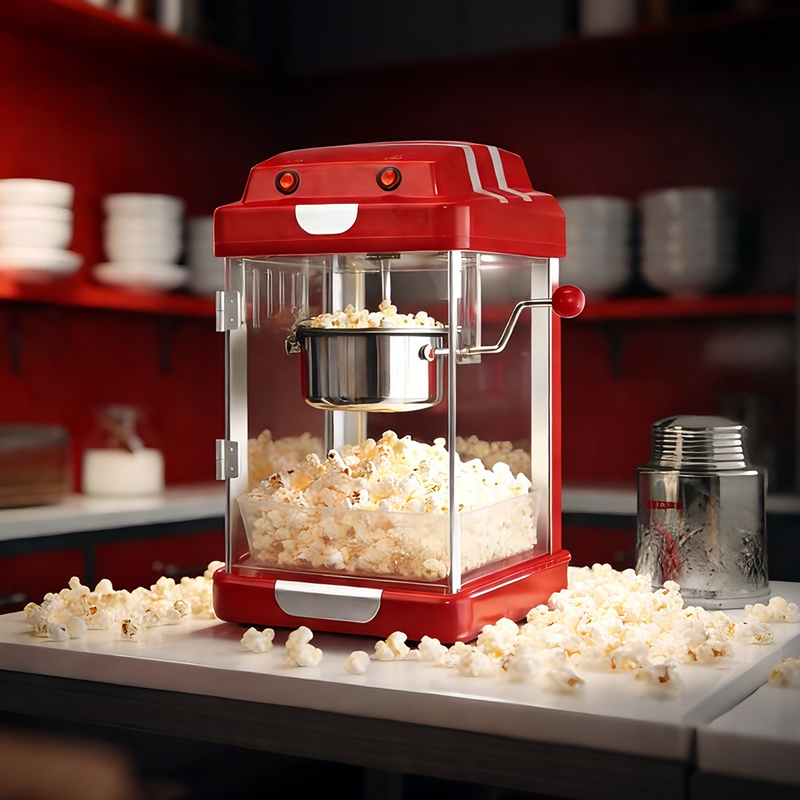

Search
Categories
Recommend News
Categories
Recommend News
-
Industry News
-
Industry News
-
Industry News
-
Industry News
Sep 21, 2026 - By admin
Popcorn Maker Guide: Types, Features & Sourcing
Popcorn Maker Basics: Which Type Fits Your Use Case
A popcorn maker is a small appliance that heats corn kernels until the moisture inside turns to steam and bursts the kernel open. For most households, a compact hot-air popcorn maker is the simplest choice, while retail, party and foodservice buyers usually look at larger stirring or countertop commercial-style popcorn machines. The right choice depends on batch size, cleaning routine, storage space and how the popcorn will be served.
Popcorn remains a popular snack. According to the Popcorn Board, Americans consume roughly 13 billion quarts of popped popcorn each year, which helps explain the steady demand for both household popcorn makers and commercial popcorn machines. This guide explains how a popcorn maker works, compares the main types, and lists what importers, distributors and retailers should check when working with a popcorn maker manufacturer.
How a Popcorn Maker Works: The Science Behind the Pop
Every popcorn maker, whether it uses hot air, a heated kettle or a microwave, relies on the same physical process. A popcorn kernel has a hard outer hull and a starchy interior that holds a small amount of water. When the kernel is heated to roughly 175 to 180 degrees Celsius (about 347 to 356 degrees Fahrenheit), the water turns to steam, pressure builds, and the hull ruptures, turning the starch into the fluffy shape we recognize.
Why the kernel structure matters
The chart below shows the approximate composition of a typical corn kernel, based on general cereal science references. Popcorn is a type of maize, and exact proportions vary by variety.
The donut chart shows that the starchy endosperm makes up the large majority of the kernel, which is the part that expands into the edible popcorn. The hull accounts for only about 5% of the weight, yet it is the part that holds pressure long enough for the steam to build up before it gives way. The germ takes up a smaller share, and the tip cap is close to negligible. This structure explains why a popcorn maker needs even, sufficiently high heat: the hull must hold pressure while the interior reaches the right temperature. It also explains why unpopped kernels, sometimes called old maids, remain in the bottom of any popcorn maker, because their hulls may have small cracks that let steam escape early.
Moisture content and the popping window
Moisture is just as important as heat. The Popcorn Board notes that kernels pop best at a moisture level of about 13.5% to 14%. The gauge below marks this window on a 0 to 20% scale.
The gauge places the recommended moisture window in the upper part of the scale, roughly two thirds of the way along. Kernels that are too dry lose the steam needed to build pressure, so more of them stay unpopped or produce small, tough pieces. Kernels that are too wet tend to produce dense, chewy popcorn. For anyone operating a household popcorn maker or a commercial popcorn machine, this means storing kernels in a sealed container away from heat and humidity matters as much as the machine itself. It also means that two identical popcorn makers can give different results if they are filled with kernels stored under different conditions.
Types of Popcorn Maker Compared
Popcorn makers differ mainly in how they transfer heat and how much they can pop in one cycle. The table summarizes the most common formats found in home kitchens, retail displays and small foodservice settings.
| Type | Heating method | Typical use | Points to check |
|---|---|---|---|
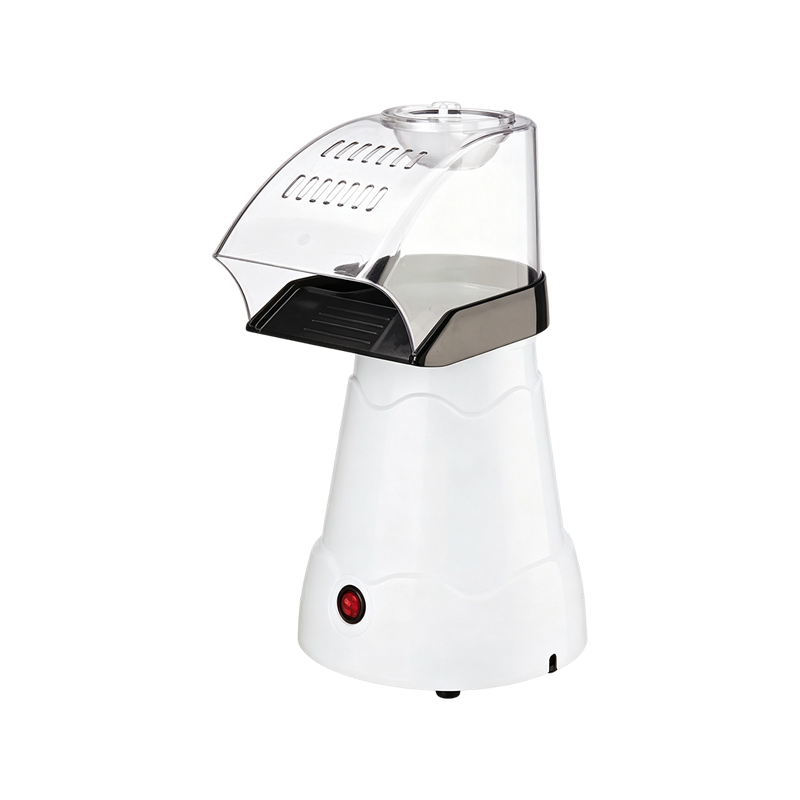
| Hot-air popcorn maker | Heated air circulation, usually without oil | Household snacks | Batch size, chute design, cleaning access |
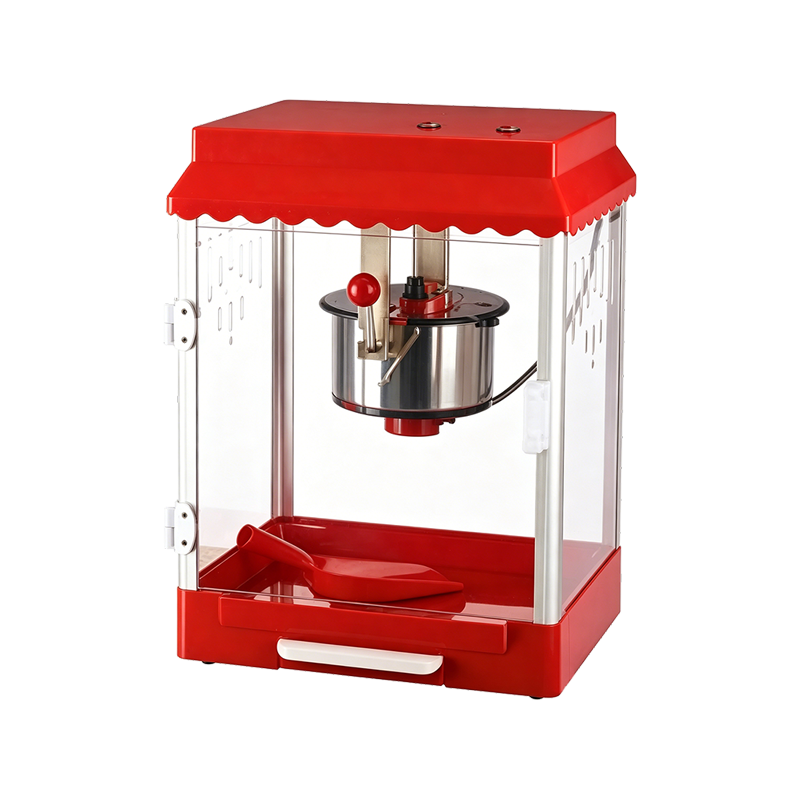
| Stirring kettle popcorn maker | Heated surface with a stirring arm and oil | Parties, events, small retail | Non-stick coating, lid design, stirring reliability |
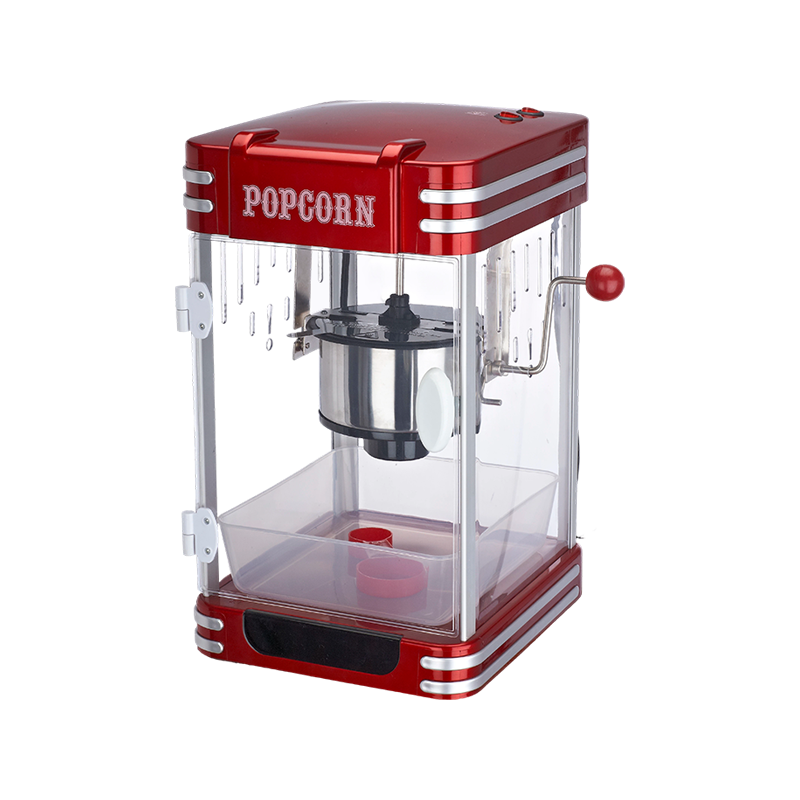
| Countertop commercial-style popcorn machine | Kettle with warming cabinet | Cinemas, cafes, foodservice counters | Cabinet size, kettle capacity, safety features |
| Microwave popcorn bowl | Microwave oven energy | Occasional home use | Material safety, vented lid, dishwasher compatibility |
Relative strengths of each popcorn maker type
The radar chart is an editorial, qualitative comparison on a 1 to 5 scale, not laboratory data, and individual models will vary. The hot-air popcorn maker scores highest for ease of use and easy cleaning, since it typically has few parts and needs no oil. The stirring kettle type leads on batch capacity and display appeal, which is why it is often chosen for events and retail counters where the popping process is part of the experience. The microwave bowl is the most compact to store, but it offers the smallest batch capacity and little visual appeal. The shape of each polygon shows that no single format leads on every axis. Buyers should therefore rank their own priorities first, then match them to the popcorn maker type that covers those priorities.
Popcorn Maker Nutrition: Air-Popped vs Oil-Popped
The method used by a popcorn maker affects the calorie content of the finished snack. Air-popped popcorn contains only the popped kernel, while oil-popped popcorn also carries the cooking oil. The Popcorn Board, citing USDA nutrient data, reports about 31 calories per cup for air-popped popcorn and about 55 calories per cup for oil-popped popcorn.
The bar chart shows that oil-popped popcorn carries roughly 24 more calories per cup than air-popped popcorn, about 1.8 times as many. The difference comes almost entirely from the cooking oil, since the kernel itself is the same in both cases. Toppings such as butter, caramel or seasoning add further calories on top of these figures, so the chart applies only to plain popcorn. This is one reason hot-air popcorn makers are common in household kitchens where people want a lighter snack, while kettle-style popcorn machines are common where flavor and aroma matter more. Retailers and distributors can use this distinction when they explain the difference between popcorn maker models to their customers.
Popcorn Maker for Home, Party, Retail and Foodservice Use
The same basic appliance serves several markets, but each market prioritizes different features.
- Household use: a compact popcorn maker with simple controls, easy cleaning and a footprint that fits a kitchen cabinet.
- Party and entertainment use: a popcorn maker with a visible popping chamber, since watching the kernels pop is part of the appeal at birthdays, movie nights and family events.
- Retail channels: a popcorn maker with clear packaging, a clean product appearance and instructions that are easy for first-time users to follow.
- Foodservice use: a commercial popcorn maker or countertop popcorn machine with larger kettle capacity, stable heating and materials suited to frequent cleaning.
What to Check When Sourcing from a Popcorn Maker Manufacturer
Importers, wholesalers and brand owners who buy popcorn makers in volume should evaluate a popcorn maker supplier on more than the finished product. The table lists practical items to confirm before placing an order.
| Area | What to confirm |
|---|---|
| Safety and compliance | Electrical safety and food-contact material test reports required in your target market |
| Materials and build | Heat-resistant, food-grade parts and secure lids, handles and cords |
| Testing and quality control | In-house testing equipment, inspection steps and sample approval process |
| Production capacity | Daily output and lead time relative to your order size |
| Product range | Whether related appliances can be sourced together from the same supplier |
Requirements differ by country, so buyers should confirm which standards apply to their market and ask the popcorn maker factory to provide the relevant documents. Sharing the intended sales channel, target user and expected order volume at the start makes it easier for the supplier to recommend a suitable model.
About Homease: A Professional Small Appliance Manufacturer
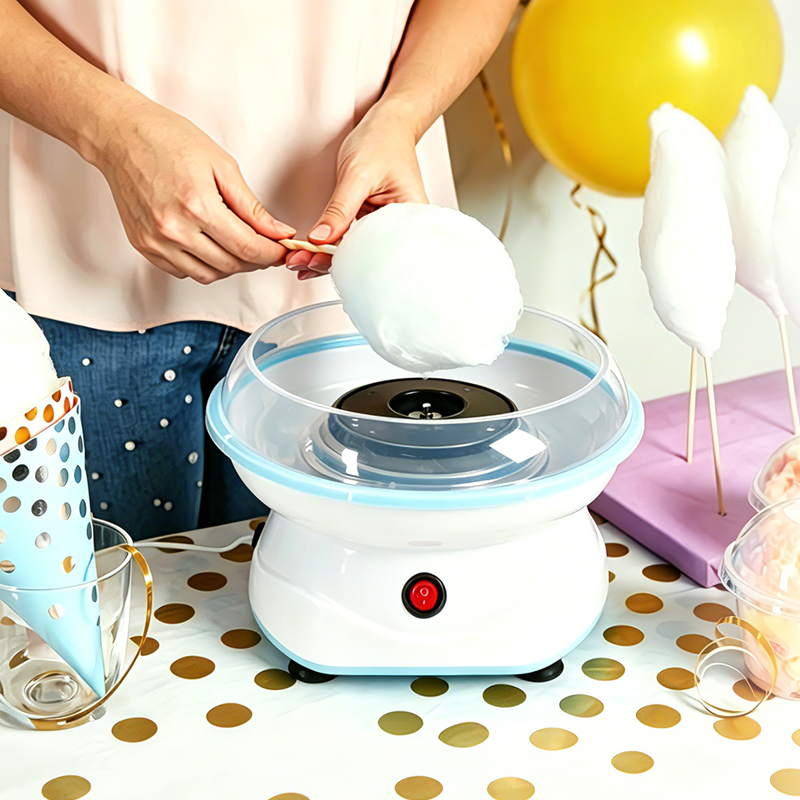
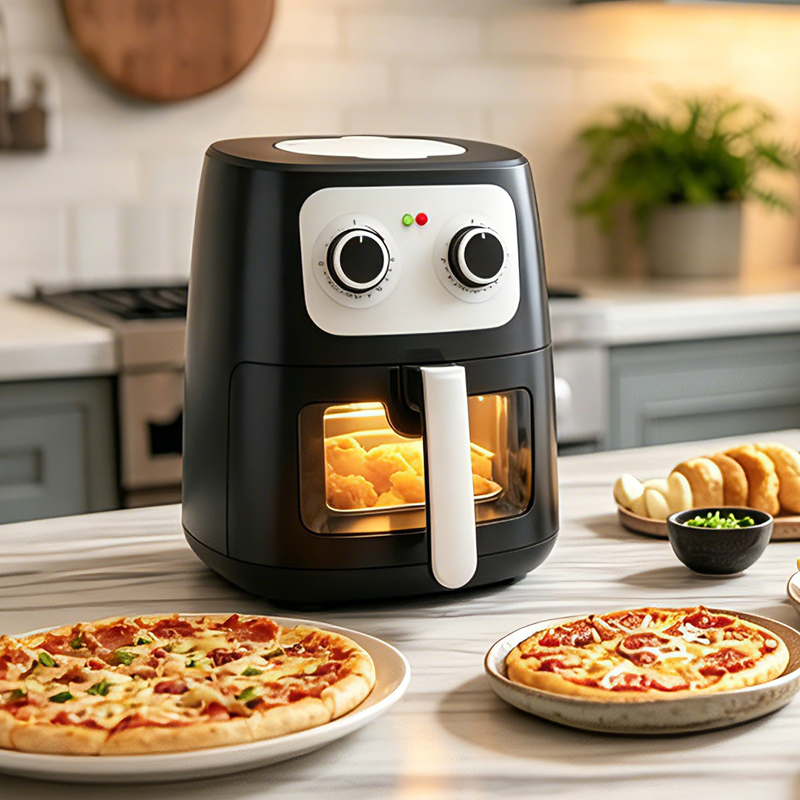
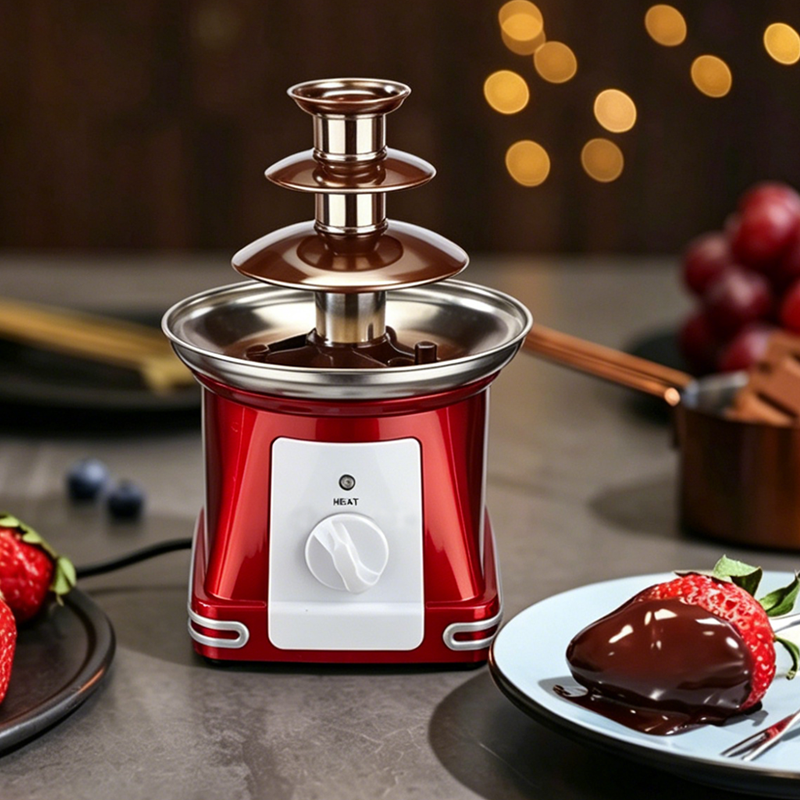
Homease specializes in the research, design, and manufacturing of small home appliances, dedicated to providing practical, stylish, and reliable kitchen appliance solutions for households and commercial customers worldwide. As a popcorn maker manufacturer, Homease also offers a wider portfolio that includes cotton candy machines, air fryers, chocolate fountains, ice makers, slush machines, and milkshake makers. These products are widely used in home kitchens, party and entertainment settings, retail channels, and foodservice applications.
Homease is an integrated small appliance manufacturer combining R&D, production, and sales, supported by a well-established management system and advanced manufacturing and testing equipment. The company operates a 20,000 m² manufacturing base and employs 300 staff, achieving a daily production capacity of up to 10,000 units. This allows Homease to meet the order requirements of customers of different scales. Buyers who are looking for a popcorn maker supplier are welcome to share their market and product requirements with the Homease team to discuss suitable options.
Frequently Asked Questions About Popcorn Makers
Q1: What is the difference between a hot-air popcorn maker and a kettle popcorn maker?
A hot-air popcorn maker circulates heated air around the kernels and usually needs no oil, while a kettle popcorn maker heats the kernels on a metal surface with oil and a stirring arm. Hot-air models are usually simpler to clean, and kettle models are often chosen for events and retail counters.
Q2: Why do some kernels stay unpopped in a popcorn maker?
Unpopped kernels usually have too little moisture inside or a cracked hull that lets steam escape. Storing kernels in a sealed container and using fresh stock can reduce the number of unpopped kernels.
Q3: What should a wholesale buyer ask a popcorn maker manufacturer?
Ask about safety and food-contact test reports for your target market, materials used, quality inspection steps, daily production capacity and lead time. It also helps to ask whether related appliances can be sourced from the same supplier.
Q4: Can a commercial popcorn maker also be used at home?
A commercial-style popcorn maker can be used at home if the space and power supply allow it, but it is larger than most household models. Buyers should compare batch size, footprint and cleaning requirements against how often the machine will be used.
Related products
Get in Touch
Your email address will not be published.
Required fields are marked *
Required fields are marked *
contact us
Have a project in mind?
Contact with us
Contact with us
We are happy to answer your questions. Please fill out this form
and one of our professional team will get back to you as soon as possible.
and one of our professional team will get back to you as soon as possible.
-
Company AddressNO.212 Qiaotou Road, Qiaotou Town, Cixi City Zhejiang Province
-
Tel:+86-574-63032602/63032605/63032682/63032681
-
E-mail:homease@homease.com.cn
huajun_sam@homease.com.cn
jayden@homease.com.cn
sunny@homease.com.cn
Copyright © Cixi Homease Electrical Products Co., Ltd. All Rights Reserved. China Small Home Appliances Manufacturer Food Equipment Factory
