
 中文简体
中文简体 русский
 Français
 Español
 Português
 Deutsch
 عربى
عربى italiano
 Türk
Türk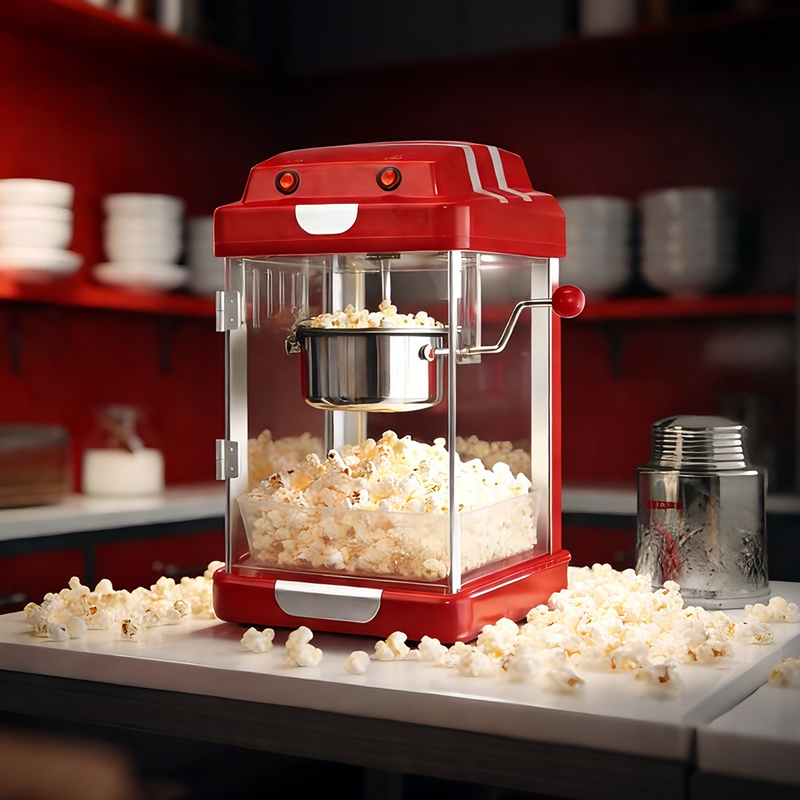

Search
Categories
Recommend News
Categories
Recommend News
-
Industry News
-
Industry News
-
Industry News
-
Industry News
Sep 14, 2026 - By admin
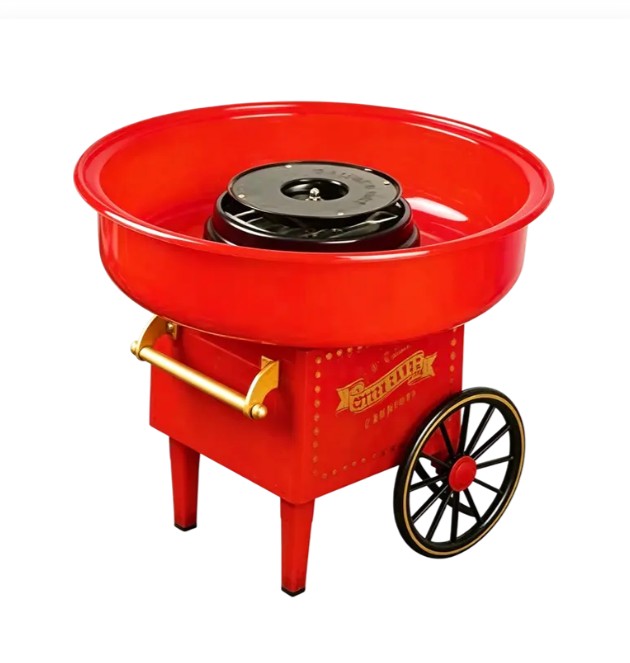
Cotton Candy Maker: How It Works, Types and How to Choose
Cotton Candy Maker Basics: What It Does and Which Type to Choose
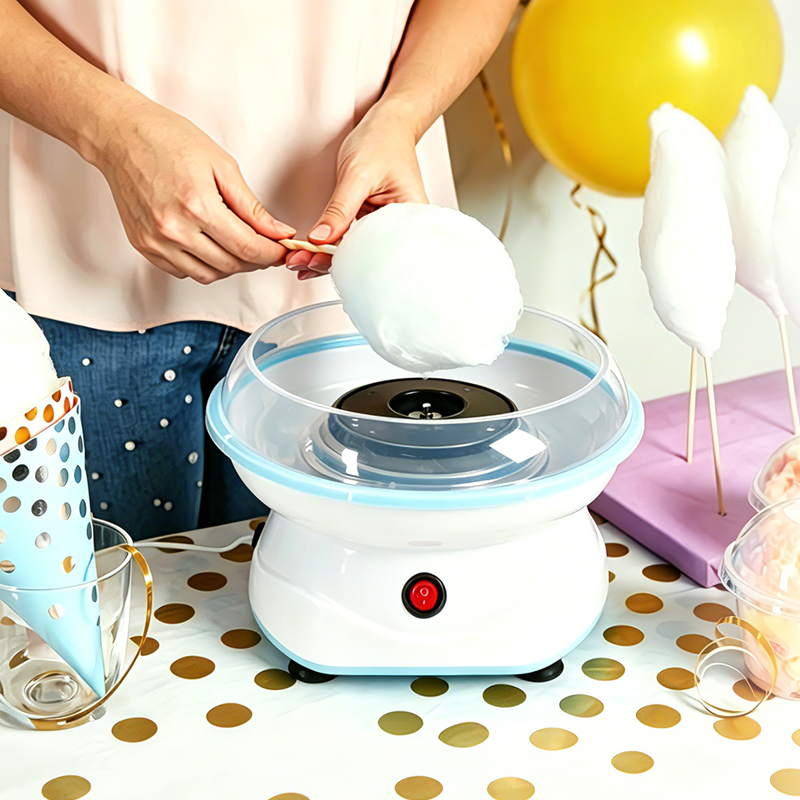
A cotton candy maker is a small appliance that melts sugar in a heated, rapidly spinning head and pushes the liquid through tiny openings, where it cools into fine threads that are collected as cotton candy floss. For most households, a compact tabletop cotton candy maker is enough for birthdays and family evenings, while events, retail counters and dessert bars generally suit a larger cotton candy machine with a bigger bowl, a bubble shield and steadier heating. The right choice depends on how many portions you plan to serve per hour, how much counter space you have, whether you prefer loose flossing sugar or hard candy, and how easily the machine can be cleaned between sessions.
The same appliance is sold under several names. In North America it is usually called a cotton candy maker or cotton candy machine, while in the United Kingdom, Australia and other regions the product is often called a candy floss machine. Whichever name is used, the working principle is the same, and the differences between models come down to size, output, heating design and the type of sugar the machine accepts.
The machine itself has a fairly short history. According to Encyclopaedia Britannica, the first electric cotton candy machine was developed in 1897 by the Nashville dentist William Morrison and the confectioner John C. Wharton, and it reached a wide audience at the 1904 World's Fair in St. Louis, where the treat was sold as fairy floss. More than a century later, the same idea of spinning melted sugar into threads remains the basis of every modern cotton candy maker, from small household units to larger machines used at fairs and in shops.
This guide explains the main types of cotton candy maker, how the structure and principle work, how to think about sugar and portion size, how to match a machine to an application, and how to keep the appliance clean and working smoothly. It also covers what buyers such as importers, distributors and retailers should look for in a cotton candy maker manufacturer or supplier. If you would like to see the range that Homease offers while you read, you can visit the cotton candy maker product page.
Short answer: choose a tabletop cotton candy maker for home use, and a cabinet-style cotton candy machine for repeated service at events, retail counters or dessert bars.
Common Types of Cotton Candy Maker and Their Features
Cotton candy makers are sold in several formats, and the differences are mainly about size, output rhythm and the kind of sugar used. The cards below summarize the four formats that buyers most often compare. On a narrow screen, the cards can be scrolled sideways.
-
Household tabletop cotton candy maker
A compact cotton candy maker built for family kitchens. It has a small bowl and a light body, and it is easy to store in a cupboard. It suits occasional cones for birthdays, movie nights and holidays. Check bowl size, cord length and how easily the parts come apart for cleaning.
-
Party countertop cotton candy machine
A mid-sized machine with a larger bowl and a wider working area. It lets a host make several cones in a row without crowding the counter. It is a common choice for parties, small gatherings and seasonal stalls. Check warm-up time, stability and how well the bowl contains stray floss.
-
Commercial cabinet cotton candy machine
A larger machine with a sturdy housing, a big bowl and usually a bubble shield that keeps floss clean and visible. It is designed for repeated service at events, retail counters and dessert bars. It needs more space and a stable power connection, so plan the location in advance.
-
Hard candy cotton candy maker
This format melts hard candies instead of loose flossing sugar, which gives users a wide choice of flavors and colors without buying separate floss sugar. It suits home and party use. Check the heating time, the size of candy it accepts and how quickly residue can be cleaned.
Features shared by every cotton candy maker
Regardless of size, every cotton candy maker is built around the same set of parts. Understanding them makes it easier to read a product description and compare models fairly.
- A heating element that raises the sugar to a liquid state.
- A spinner head with fine openings that throws the liquid sugar outward.
- A motor and base that rotate the head at high speed and keep the machine stable.
- A bowl that catches the threads as they cool.
- A cone or stick that the user moves around the bowl to gather the floss.
Features that separate one model from another
- Bowl diameter and depth, which affect how much floss can be collected and how much stays inside the bowl.
- Warm-up time and heating stability, which affect how soon the first cone can be made and how uniform later cones are.
- A bubble shield or splash guard, which keeps floss clean and visible and reduces stray threads on the counter.
- Removable parts, which make cleaning faster after use.
- The type of sugar accepted, such as flossing sugar, ordinary granulated sugar or hard candy, according to the model's instructions.
- Base stability and cord length, which matter when the machine is used at a busy counter.
Comparing these features one by one is more useful than focusing on a single specification. A machine with a large bowl but unstable heating, for example, can be harder to use than a smaller machine that heats evenly. For buyers who resell cotton candy makers, presenting these differences clearly on a product page also helps customers pick the right machine the first time.
Key point: the main differences between cotton candy makers are bowl size, heating stability, shield design, ease of cleaning and the sugar type accepted.
How a Cotton Candy Maker Works: Structure and Principle
The working principle of a cotton candy maker combines heat, rotation and rapid cooling. The machine can be divided into two groups of parts, and the table below shows what each group does.
Heating and spinning assemblyThe motor turns the spinner head at high speed. Inside the head, a heating element warms the sugar until it becomes liquid. Centrifugal force then pushes the liquid through fine openings around the edge of the head.
|
Collection and housingThe bowl surrounds the head and gathers the threads. A bubble shield or splash guard, where fitted, keeps floss contained and protects it from dust. The base carries the controls and keeps the machine stable on the counter.
|
The process from sugar to floss
- Sugar is placed in the center of the spinner head, either as loose flossing sugar or as hard candy pieces, depending on the model.
- The heating element warms the head until the sugar becomes liquid.
- The head spins, and centrifugal force pushes the liquid sugar through the tiny openings.
- On contact with the cooler air, the thin streams solidify almost instantly into fine threads.
- The threads drift toward the bowl wall, where the user gathers them on a cone or stick by moving it in a circle.
Why temperature control matters
Sugar does not simply melt and stay the same; it moves through recognizable stages as it is heated. Confectioners have described these stages for generations using terms such as thread, soft ball, hard crack and caramel. The chart below shows the commonly cited temperature range of each stage for sugar syrups, drawn as floating columns. A dashed line marks the melting point of dry sucrose, which is the situation inside a cotton candy maker. Reading the chart helps explain why the heating element in a cotton candy machine has to operate in the upper part of the temperature scale.
The chart shows that the stages climb in steps, with each range sitting a little higher than the last. Thread through firm ball, at roughly 110 to 120 degrees Celsius, describe syrups that are still fairly soft and contain noticeable water. Hard ball and soft crack, spanning about 121 to 143 degrees, describe syrups that set firmer as more water leaves. Hard crack, at roughly 149 to 154 degrees, describes syrup that turns brittle and glassy when it cools, which is close to the texture of finished cotton candy threads. Caramel, starting around 160 degrees, marks the point where sugar begins to brown and develop a different flavor.
The dashed line at about 186 degrees marks the melting point of dry sucrose. It sits higher than the syrup stages because a cotton candy maker works with dry crystals rather than a water-based syrup. In practice, the spinner head must become hot enough to liquefy the crystals quickly, but not so hot that the sugar browns before it leaves the head. This balance is why the heating element, the spinner speed and the size of the openings are designed together. It also explains why a head that has been left running empty or overheated can produce darker, slightly bitter floss. The glass-like structure of finished floss is also the reason it is sensitive to moisture, because glassy sugar readily takes up water from humid air. For buyers, the takeaway is that heating stability is a central part of a well-made cotton candy maker, and that motor speed alone does not tell the whole story.
Key point: a cotton candy maker works because heat, spinning speed and rapid cooling are balanced, so stable heating is as important as motor power.
Sugar, Flavors and Portion Sizes for a Cotton Candy Maker
Cotton candy is made almost entirely of sugar, with a small amount of flavor and color added in many products. Flossing sugar is granulated sugar prepared with color and flavor so that it spins well and looks appealing, and it is widely used in cotton candy machines. Some household models are designed to accept ordinary granulated sugar, and others rely on hard candies that melt in the head, so the instruction manual of each model should decide which type of sugar is loaded.
Why humidity matters
Finished cotton candy is a thin, glass-like sugar structure with a very large surface area. That structure absorbs moisture from the air quickly, and floss that has taken up water becomes sticky and collapses into a dense lump. For this reason, cotton candy is usually served soon after it is spun, and operators in humid climates or outdoor settings often pay extra attention to shelter and dry air. A bubble shield on the machine and a dry storage container for sugar both help protect quality.
Portion size and sugar content
Because cotton candy is almost entirely sugar, its energy content rises in a straight line with the amount of sugar in each portion. Sellers and home users often want to know how large a portion should be, and the answer depends on what the customer expects. The line chart below converts portion weight into approximate calories using the general figure of about 4 kilocalories per gram of carbohydrate. A vertical dashed line marks 25 grams, the amount the World Health Organization mentions in its 2015 guideline on sugars intake as roughly 5% of daily energy for an adult of healthy body weight. The highlighted point at 28 grams corresponds to one ounce, a portion size often used when describing a typical cone.
The chart shows a steady upward slope, since each additional 10 grams of sugar adds roughly 40 kilocalories. A one-ounce portion of about 28 grams comes to roughly 112 kilocalories, which is a modest amount for a single occasional treat. The dashed line at 25 grams sits just before the one-ounce point, so a typical full cone already slightly exceeds the daily reference amount for free sugars that the World Health Organization describes. That does not make cotton candy unsuitable as an occasional treat, but it shows why portion size deserves attention from parents, event hosts and retail operators. Larger cones of 40 or 50 grams reach 160 to 200 kilocalories, which is a noticeable amount for a single snack.
Retailers who offer smaller cones or mini cups give customers an easy way to enjoy the product with less sugar. For a cotton candy maker buyer, this is a useful design consideration, because a bowl and spinner head that produce a consistent amount of floss per cycle make portioning easier. Operators can weigh the sugar they load and count the number of cones a fill produces, which keeps portions consistent from one customer to the next. Consistent portions also help with planning at events, since the amount of sugar purchased can be linked to the number of guests. The chart is an estimate based on a general energy factor and does not replace the nutrition information printed on a specific flavored floss sugar. Because the calculation is linear, the same reasoning can be applied to any portion size that is not marked on the chart.
Key point: cotton candy is almost pure sugar, so a one-ounce cone provides roughly 112 kilocalories, and consistent portions are easier with a stable cotton candy maker.
Applications and Selection Points for a Cotton Candy Maker
A cotton candy maker is used in more settings than most small appliances, from a family kitchen to a busy event counter. The table below places the typical application scenarios beside the selection points that matter most when choosing a machine.
Application scenarios
|
Selection points
|
Home use
For home use, the priorities are compact size, simple operation and easy cleaning. A household tabletop cotton candy maker or a hard candy cotton candy maker fits this need, because both are light, easy to store and simple for a beginner to run. Home users usually make a few cones at a time, so a small bowl is normally enough.
Parties and entertainment
At parties, the machine often becomes part of the entertainment, since guests like to watch the floss form. A party countertop cotton candy machine with a larger bowl lets the host make several cones in a row. Because floss is very light, moving air can scatter threads, so a bowl that contains stray floss is useful at open-air gatherings.
Retail channels
Retailers and distributors usually stock more than one machine type so that they can serve home customers and party customers. Clear instructions, a stable base and a bowl that is easy to wash are features that reduce questions from buyers. A cotton candy maker wholesaler can also pair machines with popcorn makers and other party appliances to build a themed assortment.
Events, fairs and dessert bars
Events and dessert bars need a commercial cotton candy machine that can run through repeated service without long breaks. A cabinet-style machine with a bubble shield keeps floss clean and visible, and it gives operators a fixed work area. Many event and dessert operators use live preparation as part of the presentation, since customers enjoy watching the floss form. Humid or windy outdoor conditions reduce floss quality, so shelter and dry sugar storage are worth planning in advance.
Key point: match the machine to portions per hour first, then check space, sugar type and cleaning access.
Detailed Comparison of Cotton Candy Maker Types
The table below compares the four main types of cotton candy maker across seven practical features. It is written in general terms, and individual models within each type will differ.
| Feature | Household tabletop | Party countertop | Commercial cabinet | Hard candy type |
|---|---|---|---|---|
| Typical setting | Home kitchens | Parties and small stalls | Events, shops, dessert bars | Home and party use |
| Bowl and work area | Small bowl | Medium bowl | Large bowl with shield | Small to medium bowl |
| Output rhythm | Occasional portions | Several portions in a row | Repeated service over long sessions | Occasional portions |
| Space needed | Small, cupboard storage | Moderate countertop area | Larger, fixed location | Small to moderate |
| Consumables | Sugar per manual | Flossing sugar | Flossing sugar in larger containers | Hard candies in many flavors |
| Cleaning routine | Quick, removable parts | Regular, removable bowl | More frequent between sessions | Prompt, to remove sticky residue |
| Operator experience | Beginner-friendly | Beginner to intermediate | Some practice for uniform cones | Beginner-friendly |
Matching machine type to scenario
Choosing a cotton candy maker becomes easier when you match the machine type to the situation where it will be used. The heatmap below rates the four machine types against five typical scenarios. The scores run from 1 to 5, where a darker cell means a closer fit between the machine type and the scenario. These are qualitative editorial ratings based on typical size, output and construction, and they are not laboratory measurements. Individual models within each type will vary, so the chart is best read as a starting point for a shortlist.
Reading down the household tabletop row, the darkest cell is home use, which reflects its compact size and simple operation. The same row fades toward the retail, event and dessert bar columns, because a small bowl and limited continuous output are not designed for a queue of customers. The party countertop row peaks at birthday parties, where a larger bowl and a wider working area let a host make several cones in a row. It scores moderately for retail and events, which suits small pop-up or seasonal setups. The commercial cabinet row is nearly the mirror image of the household row, with its darkest cells in events and dessert bars and a high score for the retail counter.
A cabinet-style cotton candy machine usually carries a bubble shield and a larger bowl, which keeps floss contained and visible to customers. Its low score for home use reflects the space and setup it needs rather than any limitation in quality. The hard candy type shows a more even pattern, with its strongest scores for home use and parties, where a wide choice of flavors and simple stock handling are attractive. No single row is dark across every column, which is the main lesson of the chart. A buyer who serves both home customers and event customers, such as a distributor, may therefore need two or three machine types rather than one. Wholesalers and retailers can use the same logic to build a balanced assortment that covers household, party and commercial demand. Before finalizing a shortlist, it is still worth checking the bowl size, heating time and cleaning access of each specific model.
Key point: no single cotton candy maker type fits every scenario, so assortments that mix household, party and commercial models cover the widest range of customers.
Choosing a Cotton Candy Maker Manufacturer or Supplier
Importers, distributors, retailers and brand owners who buy cotton candy makers in volume should look at the manufacturer as carefully as the machine. A dependable cotton candy maker supplier can explain how the machine is built, how it is tested and how it can be matched to a sales channel. The following steps give a practical order for evaluating a cotton candy maker manufacturer.
- Define the target user and channel first, such as household retail, party rental or foodservice, so that the supplier can suggest suitable models.
- Request a sample and test the warm-up time, floss quality over several cones, bowl containment and cleaning access.
- Ask about heating stability and the design of the spinner head, since these affect floss consistency.
- Confirm daily production capacity and lead time against the size of your order.
- Check whether related appliances, such as popcorn makers, can be sourced from the same manufacturer to simplify your assortment.
- Review how the supplier communicates about specifications, samples and delivery, because clear communication reduces mistakes in repeat orders.
What a manufacturing setup can tell you
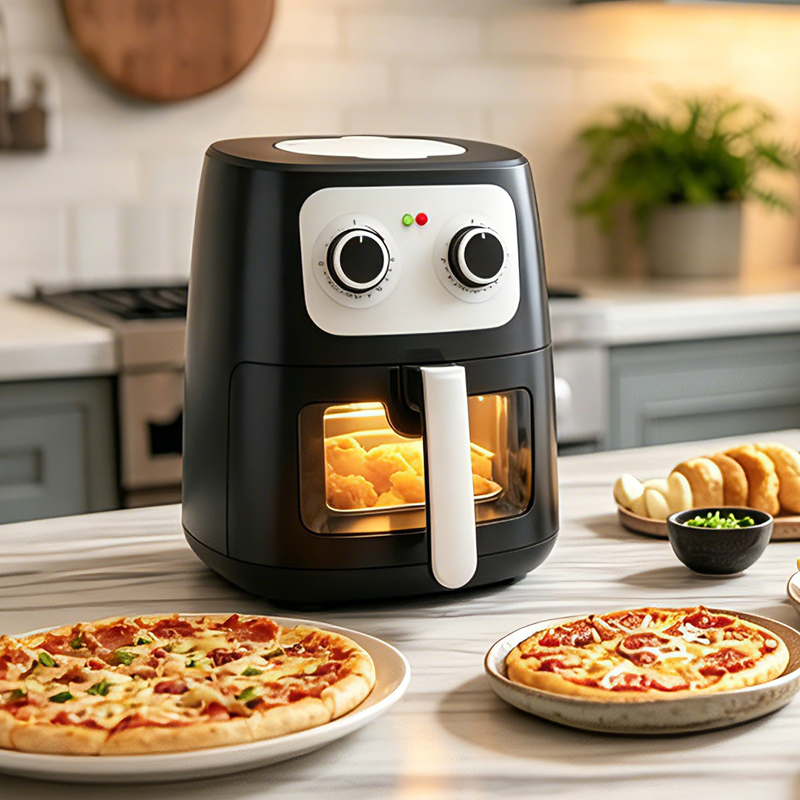
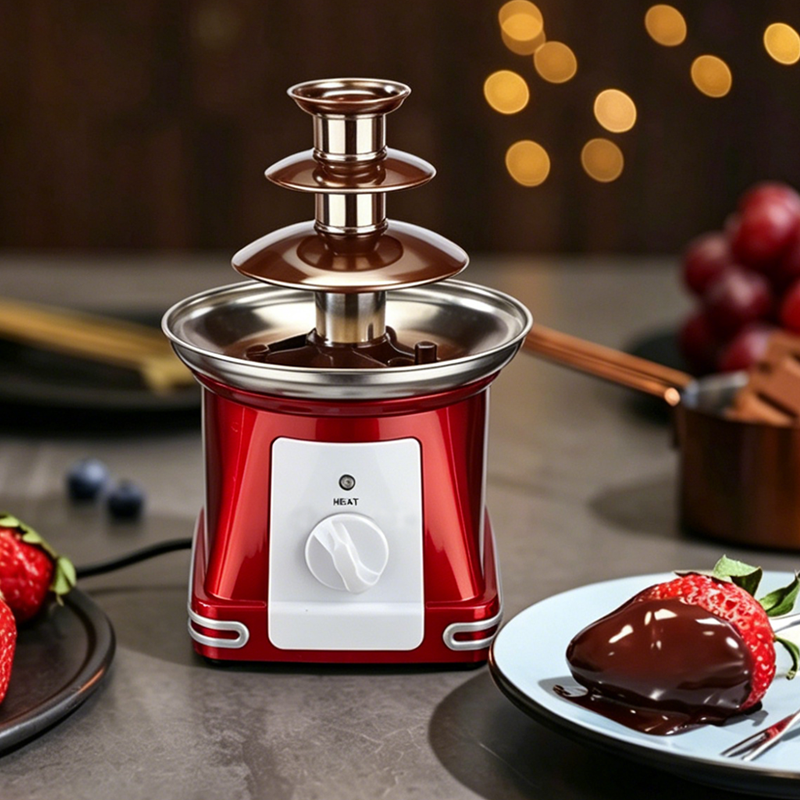
The scale and organization of a factory give useful clues about whether it can support both small and large orders. Homease is a professional small appliance manufacturer that specializes in the research, design and manufacturing of small home appliances, with a focus on practical, stylish and reliable kitchen appliance solutions for households and commercial customers worldwide. Its product portfolio covers popcorn makers, cotton candy machines, air fryers, chocolate fountains, ice makers, slush machines and milkshake makers, which are widely used in home kitchens, party and entertainment settings, retail channels and foodservice applications.
For a buyer building a party or dessert assortment, this kind of range is convenient, because a cotton candy maker, a popcorn maker and a chocolate fountain often appear together on the same event menu. Homease combines R&D, production and sales in one company, supported by a well-established management system and advanced manufacturing and testing equipment. The company operates a 20,000 m² manufacturing base and employs 300 staff, with a daily production capacity of up to 10,000 units. That capacity allows Homease to meet the order requirements of customers of different scales, from smaller distributors to larger retail programs.
Buyers who would like to compare models can review the cotton candy maker range and share their target market, use scenario and expected order size with the Homease team to discuss suitable options.
Key point: evaluate a cotton candy maker manufacturer on samples, heating stability, capacity and range, not on the product photo alone.
Cleaning and Maintenance of a Cotton Candy Maker
Sugar residue is the main maintenance concern for any cotton candy maker. Sugar dissolves easily in warm water, which makes cleaning simple when it is done soon after use, while dried residue can be harder to remove. The steps below describe a general routine, and the instruction manual of your model should take priority where it differs.
- Switch off the machine, unplug it and let it cool before touching any part.
- Remove the bowl, shield and any other detachable parts.
- Brush or wipe loose floss from the bowl and base.
- Wash detachable parts with warm water and a mild detergent, then dry them fully.
- Clean the spinner head as described in the manual, using a soft brush or a damp cloth only where the manual permits.
- Wipe the electrical base with a slightly damp cloth and keep it away from water.
- Reassemble the machine when every part is dry and store it in a dry place.
Troubleshooting common problems
| Problem | Possible cause | What to check |
|---|---|---|
| Thin or sparse floss | Head not fully warmed, or openings partly blocked | Allow full warm-up and clean the head as the manual describes |
| Bitter smell or dark sugar | Head running empty or sugar overheating | Load sugar before heating fully and remove burnt residue |
| Sticky floss that collapses | Humid air or slow serving | Serve soon after spinning and reduce exposure to moisture |
| Floss escaping the bowl | Bowl not seated correctly, or moving air | Check bowl position and use a shield where available |
| Machine vibrates | Uneven surface or residue on the head | Place on a level surface and clean the head |
| Sugar clumps in the head | Damp sugar | Use dry sugar kept in a sealed container |
Good habits extend the useful life of a cotton candy maker. Cleaning after each session, storing sugar dry and placing the machine on a level, stable surface prevent most everyday problems. Commercial operators who run the machine for long periods can also schedule a short check of the head, bowl and cord at the start of each shift.
Key point: clean the cotton candy maker while sugar residue is fresh, and keep both the sugar and the electrical base dry.
Cotton Candy Maker FAQ
How does a cotton candy maker work?A heating element melts the sugar in a spinning head, and centrifugal force pushes the liquid through tiny openings. The thin streams cool in the air and turn into fine threads, which collect on the bowl wall and are gathered on a cone or stick. |
Can I use regular sugar in a cotton candy maker?It depends on the model. Some machines are designed for flossing sugar, some accept ordinary granulated sugar, and others use hard candy. Follow the instructions for your machine, since the wrong sugar type can affect floss quality. |
Why does cotton candy become sticky or shrink?Cotton candy is a thin, glass-like sugar structure that absorbs moisture from humid air. Serving it soon after spinning and keeping it away from damp conditions helps preserve its texture. |
How much sugar goes into one cone?A typical cone is often described as about one ounce, or roughly 28 grams, of sugar, which is about 112 kilocalories. The amount varies with the machine and the operator, and smaller cones are an easy way to reduce sugar per portion. |
What is the difference between a household and a commercial cotton candy maker?A household cotton candy maker is smaller, lighter and made for occasional use. A commercial cotton candy machine has a larger bowl, usually a bubble shield, and is designed for repeated service at events, shops and dessert bars. |
What should I ask a cotton candy maker supplier before ordering?Ask for a sample and test the warm-up time, floss quality and cleaning access. Also confirm daily production capacity, lead time and whether related appliances such as popcorn makers can be sourced from the same manufacturer. |
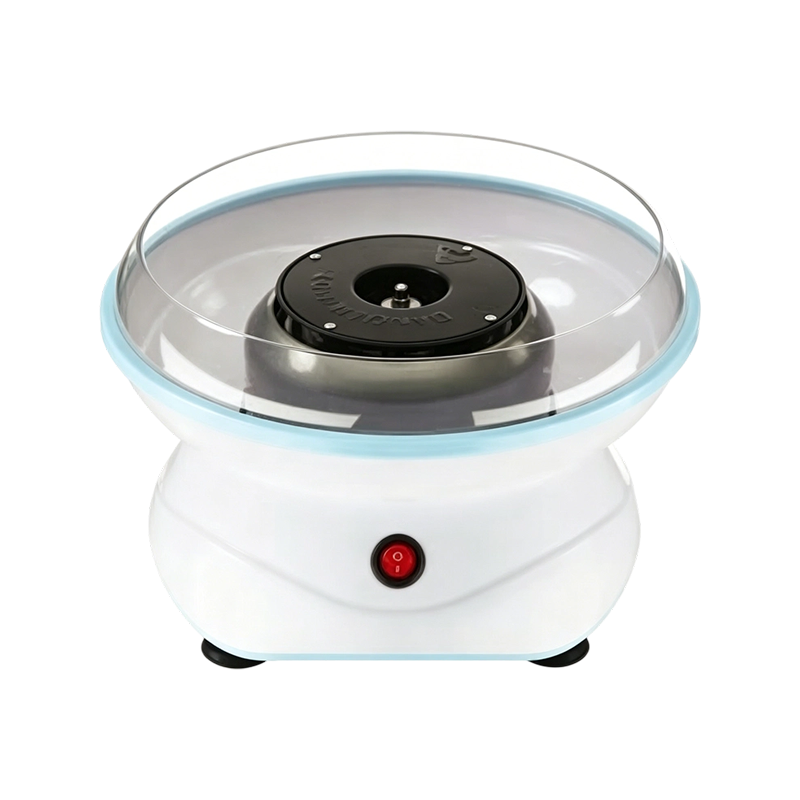
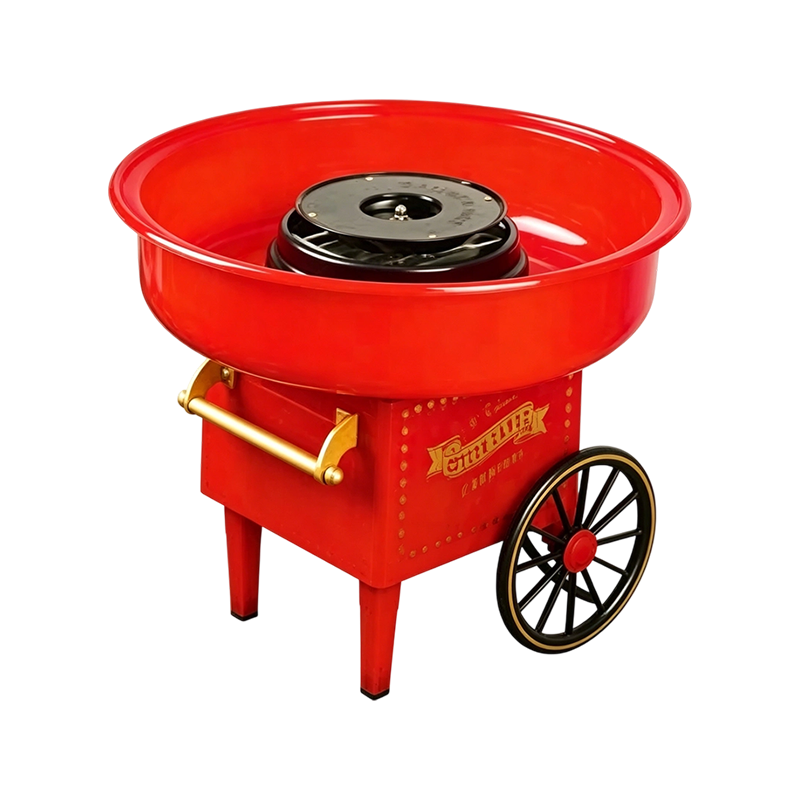
Related products
Get in Touch
Your email address will not be published.
Required fields are marked *
Required fields are marked *
contact us
Have a project in mind?
Contact with us
Contact with us
We are happy to answer your questions. Please fill out this form
and one of our professional team will get back to you as soon as possible.
and one of our professional team will get back to you as soon as possible.
-
Company AddressNO.212 Qiaotou Road, Qiaotou Town, Cixi City Zhejiang Province
-
Tel:+86-574-63032602/63032605/63032682/63032681
-
E-mail:homease@homease.com.cn
huajun_sam@homease.com.cn
jayden@homease.com.cn
sunny@homease.com.cn
Copyright © Cixi Homease Electrical Products Co., Ltd. All Rights Reserved. China Small Home Appliances Manufacturer Food Equipment Factory
