
 中文简体
 русский
 Français
 Español
 Português
 Deutsch
 عربى
 italiano
 Türk

Search
Categories
Recommend News
Categories
Recommend News
-
Industry News
-
Industry News
-
Industry News
-
Industry News
Nov 18, 2026 - By admin
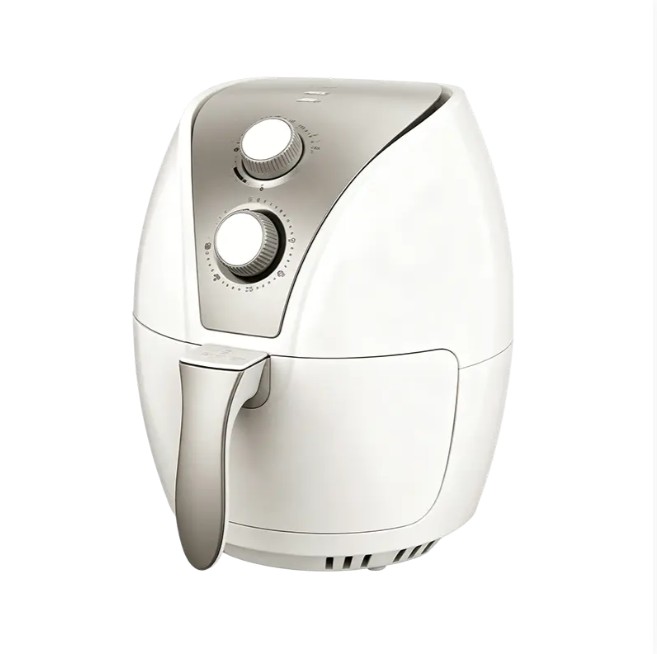
Air Fryer Chicken Burger Recipe: Patty Timing, Crisp Crust, and Basket Load
Two 110-gram chicken patties, a 4.5-litre basket, 180 °C for eleven minutes with one flip at the halfway mark, and a three-minute rest before the bun goes on. That is the working core of any dependable air fryer chicken burger recipe, and if you get those four numbers right the rest is seasoning. Most disappointing chicken burgers are not a flavour problem at all. They are a thickness problem, a moisture problem, or a basket-loading problem, and all three are fixable in the first ten minutes of cooking.
Chicken is the awkward one in a burger context. Ground chicken is leaner than beef, firms up faster, and dries out on the outside while the centre is still catching up. An air fryer moves hot air at speed, which browns a surface quickly and can pull moisture out of an unprotected patty before the interior reaches a safe temperature. That tension between browning and juiciness is what the whole recipe is really managing.
The guide below starts with the short version, then walks through the decisions that actually move the result: fat content, binder ratio, patty thickness, air temperature, coating style, and the basket characteristics that quietly decide whether your patties cook evenly. The last part of the article turns to the equipment side, because the same variables that matter on a home counter also matter to buyers evaluating air fryers in volume.
Conclusion first: a 1.5 cm patty at 180 °C, flipped once and pulled at 74 °C, is the single most reliable combination you can lock in.
The Air Fryer Chicken Burger Recipe in One Page
If you are cooking tonight and do not want the background, this is the working recipe. It makes four patties of roughly 110 g each, which fits neatly into most 4.5-litre to 6-litre baskets across two batches.
Ingredients
- 500 g ground chicken, ideally a thigh and breast mix rather than breast alone
- 30 g fresh white breadcrumb, roughly two tablespoons
- 1 medium egg, lightly beaten
- 60 g onion, grated and squeezed dry in a paper towel
- 1 level teaspoon fine salt, about 5 g for the whole mix
- Half a teaspoon ground black pepper
- 1 tablespoon neutral oil, plus a little for spraying
- 4 burger buns, a handful of slaw, pickles and a sauce of your choice
Method
- Mix the chicken, breadcrumb, egg, onion, salt, pepper and oil in a bowl until just combined. Stop as soon as it holds together.
- Divide into four portions and shape each into a patty about 1.5 cm thick and slightly wider than your bun.
- Chill the patties for 20 minutes. This firms the mix and stops them from welding to the basket.
- Preheat the air fryer at 180 °C for 3 to 4 minutes.
- Place two patties in a single layer with a finger-width gap. Cook 6 minutes, flip, then cook a further 5 minutes.
- Check the centre with a probe. Ground chicken should reach 74 °C.
- Rest the patties for 3 minutes while you toast the buns at 180 °C for about 90 seconds.
The reason this version holds up is not the ingredient list. It is the restraint. Overworking the meat makes the patty springy and dense, adding too much breadcrumb turns it into a meatloaf slice, and skipping the chill lets a soft mix collapse under forced air. Each of those errors shows up as a texture fault that no amount of sauce can rescue.
The binder is there to hold water and fat in place, not to bulk up the patty; 30 g of crumb to 500 g of chicken is the ceiling, not the starting point.
Patty Blueprint: Fat, Binder and Thickness
Three variables decide whether your chicken burger tastes like a burger or like a diet plan: the fat in the meat, the amount of binder, and the geometry of the patty.
Fat is the first decision
Skinless chicken breast mince sits around 2 to 3 percent fat. That is simply not enough to lubricate a patty through a hot air cook, and the result reads as dry even when it is technically cooked correctly. Two fixes work well. Buy thigh mince, which runs closer to 8 to 10 percent fat, or blend roughly 70 percent breast with 30 percent thigh. If you only have breast, add one tablespoon of neutral oil per 500 g, or a tablespoon of full-fat Greek yoghurt, which binds water without adding sweetness.
A less obvious but very effective addition is a small amount of grated cheese or ricotta, roughly 30 g per 500 g. It melts into the crumb structure and gives the mid-palate a rounder, juicier feel. It also browns slightly faster, so drop the air temperature by 5 °C if you use it.
Binder ratios that hold without turning bready
Fresh breadcrumb absorbs surface moisture and gives the mix cohesion. Dry, fine commercial crumb absorbs more and needs less. A reliable ratio is 30 g of fresh crumb and one egg per 500 g of chicken. If your onion is watery, squeeze it hard first, or leave it out and use a teaspoon of onion powder instead. Wet mix is the most common cause of patties that slump and stick.
Thickness and weight
A 110 g patty at 1.5 cm thick cooks through in the time it takes to brown properly. Push it to 2.5 cm and the outside will be dark before the centre is safe, forcing you to lower the temperature and accept a paler crust. Push it down to 1 cm and the patty overcooks in under eight minutes. Sliders work at 1 cm only because they are small enough to cook fast.
| Patty style | Target thickness | Air temperature | Total time | Pull at |
|---|---|---|---|---|
| Bare lean breast mince with added oil | 1.5 cm | 180 °C / 360 °F | 11 to 13 minutes | 74 °C |
| Thigh mince, natural fat | 1.5 cm | 180 °C / 360 °F | 10 to 12 minutes | 74 °C |
| Breaded or crumbed patty | 1.8 cm | 190 °C / 375 °F | 12 to 14 minutes | 74 °C |
| Frozen commercial chicken patty | 1.2 cm | 190 °C / 375 °F | 12 to 15 minutes | 74 °C |
| Sliders | 1 cm | 180 °C / 360 °F | 7 to 9 minutes | 74 °C |
Notice that the internal target never changes. Ground poultry is a dense protein matrix, and colour is not a reliable indicator. A patty can look fully white at 68 °C, which is still below the safe mark for ground chicken. A cheap instant-read probe removes all the guesswork and is the one piece of equipment worth buying before you chase better seasoning.
Fix thickness to 1.5 cm and the rest of the variables become adjustable; leave thickness loose and every other setting is guesswork.
Time and Temperature: What the Basket Actually Does
An air fryer is a small, fast convection oven. A fan pushes heated air across the food at high velocity, so heat transfer is dominated by the surface rather than by conduction through a pan. That explains two things cooks notice immediately: food browns faster than in a wall oven, and surface moisture disappears faster too. A patty with a wet, sticky exterior will therefore dry at the edges before the middle is done.
The chart below shows the typical time band for each patty style, plotted at the midpoint of the ranges in the table above. It is a planning tool rather than a prescription, because basket volume, patty starting temperature and how full the drawer is all shift the curve.
Typical cook time for a chicken burger patty in an air fryer
Sliders, 1 cm
Bare lean patty, 1.5 cm
Thigh patty, 1.5 cm
Breaded patty, 1.8 cm
Frozen commercial patty
Midpoints of common ranges at 180 to 190 °C, single layer, preheated basket.
Read the chart as a comparison of thermal load rather than a countdown. A frozen patty needs more time because the phase change from ice to water absorbs a large amount of energy before the interior can climb, and a breaded patty needs more time because the coating insulates the meat slightly. A thin slider sits at the other end: small mass, large surface area, fast result.
What the chart does not show is airflow. Two patties placed tightly together create a shadow zone where air slows down and moisture collects. The patty on the downstream side then browns unevenly and takes longer to reach temperature. Leaving a finger-width gap between patties, and never stacking them, is worth more than any seasoning tweak. In baskets under 4 litres, cook one patty at a time if you want consistent browning.
Basket design matters here too. A drawer-style basket with a perforated crisper plate and a clear gap beneath it lets air move under the food as well as over it, which is why the underside of a patty browns at all. A flat, tightly fitted plate blocks that lower flow and produces a pale, damp bottom. When we build air fryers at our manufacturing base in Cixi, the clearance between the crisper plate and the drawer floor is one of the first dimensions we lock, because it directly sets how evenly a burger patty cooks.
Even cooking in an air fryer is a function of airflow before it is a function of time, so never trade spacing for speed.
Three Coating Styles and What They Cost You
A coating changes the physics of the cook, not just the flavour. Crumbs insulate, they hold surface moisture against the meat, and they brown at a different rate than bare protein. Choosing a coating therefore means choosing a temperature and a time along with it.
Bare patties give the cleanest chicken flavour and the shortest cook, but they need a light oil film or they will pick up a grey, matte surface. Egg-washed breadcrumb gives a classic sandwich crunch and tolerates a slightly higher temperature. Coarse cornflake or panko crusts give the loudest crunch but burn at the tips if the temperature creeps above 200 °C.
| Coating | Crust result | Extra oil needed | Best setting | Main risk |
|---|---|---|---|---|
| None, bare patty | Light browning, soft surface | Light spray both sides | 180 °C, 11 minutes | Sticking to the plate |
| Egg wash and fine dry crumb | Thin, even, sandwich-style | Light spray once | 190 °C, 12 minutes | Crumb blowing off in the fan |
| Coarse cornflake or panko | Heavy, open crunch | Spray both sides | 190 °C, 13 minutes | Dark tips, burnt edges |
| Parmesan and almond crumb | Dense, savoury, gluten free | Light spray once | 185 °C, 12 minutes | Nuts scorching before meat is done |
If the crust is blowing off, the problem is usually adhesion rather than airflow. Pat the patty dry, dust with flour, then egg, then crumb, and press the crumb in with the back of a spoon. Rest the coated patties for ten minutes before cooking so the egg sets slightly. That single pause makes more difference than lowering the fan speed.
A gluten-free version works with the same structure: replace wheat crumb with crushed rice cereal or fine polenta, keep the egg wash, and reduce the temperature by 5 °C because rice and corn coatings colour faster than wheat.
Press the crumb on and rest the coated patty for ten minutes; adhesion, not temperature, is what keeps a crust intact.
Building the Burger: Bun, Crunch and Sauce
A well-cooked patty can still be ruined at the assembly stage. The two enemies are steam and imbalance, and both are easy to control.
The bun
Toast the cut faces at 180 °C for 60 to 90 seconds, cut side up, directly on the crisper plate. This creates a moisture barrier and stops the bun from collapsing. Brioche benefits from an extra 15 seconds because of its butter content; a soft milk bun needs less. Do not butter the bun before toasting in an air fryer, because the butter will pool and smoke.
The crunch layer
Something crisp and slightly acidic belongs between the patty and the bottom bun. A quick slaw of shredded cabbage, a squeeze of lime, a pinch of salt and a teaspoon of mayonnaise does the job in two minutes. Pickled cucumber slices work equally well and add less moisture. The important rule is to keep wet ingredients off the bottom bun, because that is where a burger structurally fails first.
The sauce
A workable house sauce ratio is three parts mayonnaise, one part thick yoghurt, half a part mustard, and acid to taste. Yoghurt lightens the texture without thinning it, which matters for a lean patty. Add heat through paprika or a little chilli paste rather than watery hot sauce, and keep the total sauce to about a tablespoon per burger. Too much sauce masks the crust you worked to build.
Assembly order
- Bottom bun, spread thinly with sauce
- Slaw or pickles, drained
- Patty, rested and blotted once on paper towel
- A thin slice of cheese if using, added in the last 30 seconds of cooking so it melts in the basket
- Top bun, sauce on the inside face only
Cheese is worth a note. Adding a slice after cooking and returning the patty to the basket for 30 seconds at 180 °C gives a proper melt without drying the meat. Laying cheese on a raw patty and cooking it for the full time will split and brown the edges before the centre softens.
Toast the bun and drain the slaw; almost every soggy chicken burger fails at those two points rather than at the patty.
Six Failures That Ruin Chicken Burgers, and Their Fixes
These are the faults that come up again and again, in home kitchens and in test kitchens alike. Each one has a specific cause and a specific correction.
- Dry, chalky interior. Usually lean breast mince cooked past 76 °C. Fix: use thigh or add oil, and pull at 74 °C rather than waiting for a darker colour.
- Patty falls apart in the basket. Too little binder or too much wet onion. Fix: squeeze the onion dry, add 10 g more crumb, and chill for 20 minutes before cooking.
- Raw centre with a dark crust. Patty too thick for the temperature. Fix: flatten to 1.5 cm or drop the temperature to 170 °C and extend the time by two minutes.
- Sticking and torn bottoms. No preheat and no oil film. Fix: preheat for 3 to 4 minutes and spray the plate lightly, not the patty heavily.
- Uneven browning between two patties. Crowding. Fix: cook in two batches, or rotate the drawer position halfway through if your model has a single drawer.
- Bitter, scorched crumb. Coarse coating at too high a temperature. Fix: 185 to 190 °C, spray both sides, and check at the 10-minute mark.
One more fault deserves its own line: a patty that tastes flat despite good seasoning. Salt in the mix needs a little time to move into the protein, so resting the seasoned mix for 15 minutes before shaping improves flavour noticeably. Salting after cooking only flavours the surface.
If you cook chicken burgers regularly, keep a small notebook of temperature, time and patty weight for your own basket. Two or three rounds will tell you more about your specific machine than any generic chart, because wattage, basket volume and fan design all shift the curve by a minute or two in either direction.
Season the mix and let it stand for 15 minutes; salt needs contact time with the protein, not just a pass at the end.
Make-Ahead, Batch Cooking and Reheating
Chicken burgers are well suited to preparation in advance, provided you handle the moisture correctly at each stage.
Raw patties
Shape the patties, place them on a tray lined with parchment, and freeze for two hours before transferring to a bag. Frozen raw patties cook from frozen at 180 °C for 15 to 17 minutes, flipping at the halfway point. Do not thaw and refreeze. If you plan to cook within 24 hours, refrigerate instead and add one minute to the cook time.
Cooked patties
Cool completely within an hour, then refrigerate for up to three days. Reheat at 160 °C for 4 to 5 minutes. A hotter, shorter reheat will dry the exterior before the centre warms; a microwave will make the crumb rubbery within seconds. If you are reheating a breaded patty, a light spray of oil before reheating restores some of the surface texture.
Feeding four or more
Most 4.5-litre baskets hold two 110 g patties comfortably and three only if they are small. For four people, cook two batches rather than one crowded one, and hold the first batch in a warm oven at 90 °C. The held patties will soften slightly, so build those burgers first and keep the freshly cooked ones for the table.
Buns, slaw and sauce can all be prepared while the first batch cooks. The entire sequence, from mixing bowl to plated burger, lands at around 35 minutes for four people without any rushing, which is the practical reason this recipe holds a place in a weeknight rotation.
Two clean batches always beat one crowded basket, even though the crowded version looks faster on paper.
Why Basket Design Changes the Result
The same recipe produces noticeably different burgers in two different machines, and the reason is almost always hardware rather than technique. Four design points do most of the work.
Usable basket area versus stated capacity
Stated litres tell you volume, not cooking surface. A tall, narrow 5-litre basket may only fit two patties side by side, while a wider 4.5-litre drawer fits three. For anyone cooking burgers regularly, the flat crisper area matters more than the headline number. Check the internal dimensions of the crisper plate, not just the capacity figure on the box.
Wattage and recovery
A 1,400 W unit and a 1,800 W unit set to the same temperature behave differently once cold food goes in. The higher-wattage model recovers temperature faster after the drawer is opened, which shortens the cook and reduces the drying effect of a long, slow climb back to set point. Opening the drawer to flip costs 10 to 20 seconds of heat; a stronger element replaces it more quickly.
Perforation pattern and plate clearance
Air needs a path under the food. A crisper plate with generous perforation and 8 to 12 mm of clearance above the drawer floor browns the underside of a patty far better than a tight, sparsely perforated plate. This is also the area that collects fat, so a removable, dishwasher-safe plate is a practical requirement rather than a luxury.
Coating durability
Non-stick performance fades with abrasive cleaning and repeated high-temperature cycles. A two-layer coating that survives 200 °C cycles without blistering keeps patties releasing cleanly for years, which is why coating specification is one of the details buyers ask about most often when they evaluate a supplier.
Cixi Homease Electrical Products builds air fryers within a broader small-appliance range that also includes popcorn makers, cotton candy machines, chocolate fountains, ice makers, slush machines and milkshake makers. The company operates a 20,000 square metre manufacturing base with around 300 employees and a daily capacity of roughly 10,000 units, and supports custom design work alongside new product introduction through to volume production. That combination matters for buyers who need a recipe-tested platform rather than a generic shell.
Judge an air fryer by usable crisper area and plate clearance, not by the capacity number printed on the carton.
What Buyers Check Before Ordering Air Fryers in Volume
For distributors, retail buyers and food-service operators, the recipe above doubles as a test protocol. A patty is an awkward load: it is wet, it releases fat, and it demands even browning on both faces. If a sample unit handles a 1.5 cm chicken patty consistently across a full basket, it will handle most of what a customer throws at it.
When evaluating an air fryer manufacturer or supplier, the practical questions tend to cluster around a small number of specifications. The table below sets out what to ask and why each point affects the end user.
| Specification | Why it matters | Sensible range |
|---|---|---|
| Usable crisper area | Determines how many patties cook evenly at once | 22 to 28 cm across for a family model |
| Power rating | Faster heat recovery after opening the drawer | 1,400 to 1,800 W |
| Temperature range | Needs headroom for breaded coatings and low settings for reheating | 80 to 200 °C |
| Timer and auto shut-off | Safety compliance and predictable results | 30 to 60 minutes with cut-off |
| Plate coating durability | Affects release, cleaning and warranty returns | Two-layer non-stick, dishwasher safe |
| Certification package | Market access for the destination country | Matched to target market requirements |
Beyond the specification sheet, three commercial points decide whether an order runs smoothly. The first is sample-to-production consistency: a hand-built sample that browns perfectly is not proof that unit 5,000 will. Ask how the supplier controls process variation between new product introduction and mass production, and whether standardised operating procedures are documented on the line. The second is order flexibility, since a wholesaler may need a small trial run before committing to a full container. The third is customisation scope, covering housing colour, control interface, basket shape and packaging artwork.
A manufacturer with in-house design and tooling capability can usually shorten the path from concept to a shippable unit, because changes to the basket or the heating layout do not require a third party. It also helps to see the production environment, the test benches and the sample room before placing a first order, since those are the places where quality problems either get caught or slip through.
Appliance Categories From Our Production Range
- Air fryers for household and light commercial use
- Popcorn makers, including hot air, retro and countertop formats
- Cotton candy machines
- Chocolate fountains
- Ice makers
- Slush machines
- Milkshake makers
Custom design, private label programmes and new product introduction support are available across these categories for buyers working at different order scales.
Test a sample with a real chicken patty, then ask how the supplier holds that result at unit 5,000; the second question is the one that protects the order.
Frequently Asked Questions
How long does an air fryer chicken burger recipe take from start to finish?
Allow about 35 minutes for four patties including mixing, chilling and two cooking batches. The cooking itself is 11 to 13 minutes per batch at 180 °C. If you skip the 20-minute chill, the patties will still cook, but they are more likely to deform and stick.
Can you put raw chicken patties straight into an air fryer?
Yes, and it is the intended method. Raw ground chicken patties cook safely in a preheated basket at 180 °C provided the centre reaches 74 °C. Do not stack them and do not cook from a wet, sticky mix, since both lead to uneven results.
Why do my chicken burgers come out dry in the air fryer?
In most cases the meat is too lean, the patty is too thin, or it stayed in too long. Breast mince with no added fat dries quickly under forced air. Switch to a thigh blend or add a tablespoon of oil per 500 g, keep the patty at 1.5 cm, and pull it at 74 °C rather than waiting for a darker crust.
Do you have to flip chicken burgers in an air fryer?
Flipping at the halfway point gives a more even crust and helps the patty cook through without one side over-browning. Some newer units with strong bottom airflow cope without a flip, but the difference in browning is visible, so it is worth the ten seconds.
Can you cook frozen chicken burgers in an air fryer?
Yes. Cook from frozen at 190 °C for 12 to 15 minutes, flipping once, and check the centre reaches 74 °C. Do not thaw first, because a thawed patty releases water that steams the crust and slows browning.
What internal temperature makes ground chicken safe?
74 °C is the recognised safe target for ground poultry. Colour is unreliable because ground chicken can look white well below that point. A probe thermometer inserted into the thickest part is the only dependable check.
Can you prepare the patties the night before?
Yes. Cover and refrigerate shaped patties for up to 24 hours, then cook straight from the fridge and add about one minute to the time. The rest actually improves binding, so this is one of the few prep steps that helps both texture and scheduling.
What size air fryer do you need for four chicken burgers?
Look for a usable crisper area that fits two 110 g patties side by side with a gap, which usually means a 4.5-litre basket or larger. Four patties at once generally needs a 6-litre drawer or a dual-basket design, and even then the browning will be less even than two clean batches.
Is oil necessary at all?
Not much, but some. A light spray on a bare patty improves colour and release, and a light spray on a crumbed patty helps the coating crisp. Heavy oiling creates smoke and a greasy crust, so a thin film is the aim rather than a coating.
Whatever else changes, the safe pull temperature for ground chicken stays at 74 °C.
A Recipe That Doubles as a Product Test
Chicken burgers are unforgiving in a useful way. They expose weak airflow, thin coatings, slow heat recovery and cramped baskets faster than almost any other everyday food, which is why they make a sensible benchmark for anyone testing a machine before buying it or before committing to a production run.
For the home cook, the takeaway is simple: keep the patty at 1.5 cm, keep the temperature at 180 °C, keep the basket uncrowded, and stop cooking at 74 °C. Everything else, from the crumb to the sauce, is a preference you can adjust freely without breaking the result. For the buyer, the same four numbers translate into a specification conversation about power, plate area, coating durability and process consistency.
Get those basics settled and the recipe becomes what it should be: a fast, repeatable weeknight burger that behaves the same way on the tenth attempt as it did on the first.
A repeatable result comes from controlling thickness, temperature and spacing, and from leaving everything else open to taste.
Related products




Get in Touch
Your email address will not be published.
Required fields are marked *
Required fields are marked *
contact us
Have a project in mind?
Contact with us
Contact with us
We are happy to answer your questions. Please fill out this form
and one of our professional team will get back to you as soon as possible.
and one of our professional team will get back to you as soon as possible.
-
Company AddressNO.212 Qiaotou Road, Qiaotou Town, Cixi City Zhejiang Province
-
Tel:+86-574-63032602/63032605/63032682/63032681
-
E-mail:homease@homease.com.cn
huajun_sam@homease.com.cn
jayden@homease.com.cn
sunny@homease.com.cn
Copyright © Cixi Homease Electrical Products Co., Ltd. All Rights Reserved. China Small Home Appliances Manufacturer Food Equipment Factory
